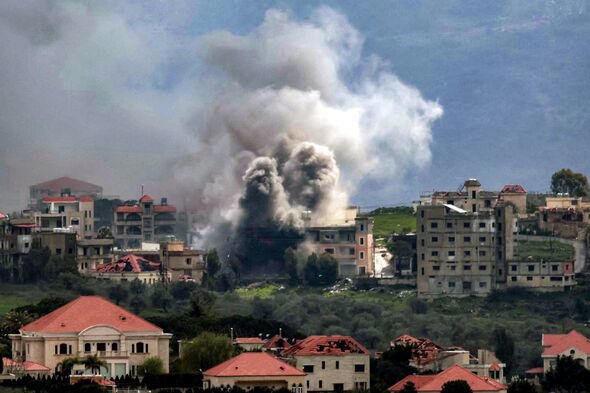
The Middle East is on a razor’s edge. As the US-Israel war on Iran enters its third week, the stakes have dramatically escalated — and the latest threat from Tehran has sent shockwaves through global financial markets, energy sectors, and corporate boardrooms worldwide.
Iran’s Revolutionary Guard issued a warning that it will hit US-affiliated industries in the Middle East, urging workers and residents in surrounding areas to evacuate. This is not background noise. This is a direct, named, and time-sensitive threat — and understanding what it means could matter for your safety, your investments, and your business.
What Exactly Did Iran Warn?
The Iran Islamic Revolutionary Guard Corps (IRGC) warned it could attack “economic centres and banks” in the region that have links to the US and Israel. Inc The warning came after Iranian infrastructure was struck in the ongoing US-Israeli military campaign.
The spokesperson for the Khatam al-Anbiya Headquarters said, “The enemy left our hands open to targeting economic centres and banks belonging to the United States and the Zionist regime in the region.” Inc
This was not a vague diplomatic signal. It was an operational warning with specific targets named.
Tasnim News Agency, which has ties to the IRGC, released a list of offices operated by major US companies that it said are “Iran’s new targets.” Companies reportedly included on the list — Google, Microsoft, Palantir, IBM, Nvidia, and Oracle — have offices in several Israeli cities and some Gulf countries. Inc
In other words, the threat is not limited to military installations. It reaches directly into the technology and financial sectors of the global economy.
The Broader Context: How Did We Get Here?
To understand the gravity of Iran’s warning, it’s important to trace how this conflict unfolded so rapidly.
The United States and Israel continue to carry out attacks as the war with Iran enters its 17th day. Unlike the June 2025 strikes, which US President Donald Trump said curbed Iran’s nuclear capabilities, the current conflict has spread across at least a dozen countries, closed the Strait of Hormuz — the world’s major oil artery — and killed more than 2,300 people in the region. Al Jazeera
The Strait of Hormuz closure alone has triggered a global economic emergency.
Iran’s attacks and threats have nearly halted shipping in the Strait of Hormuz, sending petroleum prices soaring 40 percent and roiling the global economy. euronews
About one-fifth of global oil supplies and one-third of fertilizers used around the world pass through the vital waterway. NBC News With that route effectively closed to US-aligned nations, the economic ripple effects are already being felt everywhere from gas pumps to grocery stores.
Iran’s Specific Threats to US Industrial and Energy Infrastructure
The Revolutionary Guard’s warning is not limited to tech companies. Iran’s joint military command reiterated its threat to attack US-linked “oil, economic and energy infrastructures” in the region. euronews
Iran threatened to reduce US-linked oil facilities to “a pile of ashes” if oil structures on Kharg Island were attacked, Al Jazeera and that threat has only hardened since US forces struck the island.
Iran’s parliamentary speaker has said strikes against the country’s oil infrastructure would provoke a new level of retaliation. PBS
The escalation ladder is steep, and each rung brings the risk of direct attacks on civilian and commercial infrastructure closer to reality.
Key Sectors Identified as Targets:
- Financial institutions — banks and economic centers with US or Israeli affiliations
- Technology companies — Google, Microsoft, Nvidia, IBM, Oracle, Palantir
- Energy infrastructure — oil refineries, ports, pipelines, and fuel depots in Gulf states
- Shipping and logistics — tankers and commercial vessels in the Strait of Hormuz
- US military-adjacent facilities — airports, docking facilities, and industrial zones near US bases
The Cyber Threat Dimension: What American Businesses Must Know
While missile strikes grab headlines, the threat to US industries extends well beyond physical borders — and right into American servers.
The US intelligence community has issued a flurry of private warnings in the past week to American companies and government agencies urging vigilance and the hardening of possible targets of cyber attack by the Iranian regime in response to the war with Tehran. CNN
The Department of Homeland Security warned of a heightened threat environment following the killing of Iran’s supreme leader, Ayatollah Ali Khamenei. Two top Iranian religious leaders issued separate Farsi-language fatwas calling on Muslims worldwide to take revenge for the killing. CNN
US security officials warned that “ongoing claims and calls for cyber attacks targeting US entities by Iranian-aligned groups could lead to an increase in malicious activity against the financial services sector,” adding that “historically, the US financial sector has been viewed as a priority target and a target of opportunity by Iranian-aligned cyber actors.” CNN
This is a critical point: you do not need to be in the Middle East to be targeted. American businesses operating digitally — which is virtually everyone — face a credible and elevated threat right now.
How Real Is the Threat? What Intelligence Agencies Are Saying
US officials have not announced any known credible threats to the homeland, but a law enforcement source told CNN the FBI went on an elevated alert status across the country following the launch of strikes by US and Israel. Authorities were particularly concerned about enhancing security measures around US energy infrastructure, hardening potential government targets against cyber threats from sophisticated Iranian actors, and securing the border. CNN
That is a significant posture shift. The FBI doesn’t move to elevated alert for theoretical risks — this reflects real, assessed concern.
Meanwhile, Iran has declared all US financial institutions and other tech and multinational companies in the Middle East as justified targets. Al Jazeera The legal and operational framework for these attacks, from Tehran’s perspective, is already in place.
Global Economic Fallout: What’s Already Happening
The warning doesn’t arrive in a vacuum. The economic consequences of this conflict are already severe:
- Stock markets experienced declines, with the Dow Jones Industrial Average falling over 400 points on March 2. Wikipedia
- Broader economic forecasts warned of inflationary pressures and slowed global growth if the conflict prolonged. Wikipedia
- The UN World Food Programme and various economic analysts have warned that the 2026 military escalation in Iran is driving significant, long-term increases in global food prices. Wikipedia
- The price of oil soared back above $100 a barrel, while the US eased sanctions on Russian oil in a bid to stabilize markets. NBC News
These are not projections anymore — they are live conditions affecting businesses and consumers globally right now.
Practical Steps: What Businesses and Individuals Should Do Right Now
Whether you are a corporate executive, a small business owner, or simply a concerned citizen, there are concrete actions worth taking immediately.
For Businesses Operating in the Middle East:
- Evacuate non-essential personnel from areas near US-linked industrial zones and energy facilities in Gulf states, in line with IRGC evacuation warnings.
- Audit your cybersecurity posture — patch vulnerabilities, enforce multi-factor authentication, and review access controls, especially in financial and tech environments.
- Review business continuity plans — ensure you have protocols for operational disruption, supply chain breaks, and potential internet or communications outages.
- Monitor DHS and FBI advisories in real time and subscribe to government threat-level bulletins.
- Coordinate with local authorities and US embassy contacts in-country for updated safety guidance.
For US-Based Businesses with Global Operations:
- Harden financial sector cyber defenses now — Iranian cyber actors have historically targeted banking and fintech infrastructure.
- Back up critical data to geographically distributed, air-gapped environments.
- Vet third-party vendors operating in or near conflict zones for supply chain exposure.
- Brief your teams — employees should know the current threat level and understand reporting protocols for suspicious digital or physical activity.
- Hedge energy exposure — if your business is sensitive to oil price volatility, consult a financial advisor on near-term protective positions.
For Individual Citizens:
- Stay informed through credible, verified sources (avoid misinformation, which Gulf states are actively prosecuting).
- The State Department again warned citizens in Iraq to leave “now,” and by land since commercial flights were not available. PBS If you are in high-risk zones, do not delay.
- Monitor travel advisories before any international travel in the region.
The International Response: Is Anyone Stepping In?
US President Donald Trump warned that NATO faces a “very bad future” if allies fail to assist in opening the Strait of Hormuz with naval deployments. Japan, Australia, Germany, Greece, the UK, Italy, the Netherlands, and the European Union ruled out getting involved in the Israel-US war on Iran. Al Jazeera
That diplomatic isolation makes the situation more unpredictable. Without multilateral backing, the US faces the escalating conflict on a narrower coalition, and Iran perceives less international deterrence.
An expert warned that if this continues, it could lead to a worldwide economic recession. Gas prices also rose, and analysts said raising the world’s prices was part of the Iranian government’s plan to apply pressure on the world to stop the war. Wikipedia
What Comes Next: Scenarios to Watch
The situation is highly fluid, but three near-term scenarios are most likely:
Scenario 1 — Controlled Escalation: Iran continues targeted attacks on Gulf energy infrastructure while avoiding direct hits on Western tech hubs, maintaining pressure without triggering a wider NATO response.
Scenario 2 — Full Infrastructure War: Iran follows through on its explicit warnings and strikes US tech and financial company offices in the Gulf, potentially triggering direct retaliation and a rapid widening of the conflict.
Scenario 3 — Diplomatic Breakthrough: Back-channel negotiations, potentially through Oman or Qatar, produce a temporary ceasefire, easing oil prices and industrial targeting threats — though this currently appears unlikely given Iran’s public posture.
Conclusion: Take This Warning Seriously
Iran’s chilling warning that US industries will be attacked in the coming hours is not rhetoric for domestic audiences — it is an operational signal backed by a Revolutionary Guard that has already demonstrated its willingness to strike airports, embassies, oil facilities, and civilian infrastructure across the region.
The convergence of physical strike threats, named corporate targets, and elevated US intelligence warnings around cyber attacks means the risk landscape for American businesses — at home and abroad — has fundamentally shifted in the past 17 days.
Now is the time to act, not to wait and watch.