The bombs have fallen. The Supreme Leader is dead. And yet the 2026 Iran war — now in its seventeenth day — shows no clear path to a conclusion.
Air strikes have shattered Iran’s military infrastructure, sunk more than fifty naval vessels, and severely degraded its missile capabilities. But one problem remains unsolved, one that could define the outcome of this entire conflict: no one knows exactly where Iran’s enriched uranium stockpile is — or whether it is still secure.
That is where the death-defying nuclear commando mission comes in. US and Israeli authorities have reportedly been considering a special operations ground raid to extract or otherwise neutralize Iran’s stockpile of enriched uranium, given that this nuclear material is understood to be stored in deep underground bunkers — presenting challenges for attempting to achieve this objective from the air alone.
This is not a movie plot. It is a real, discussed, and potentially imminent military option — and it could be the mission that ends the war, or the one that widens it catastrophically.
Why Air Strikes Alone Are Not Enough
From the opening salvos of Operation Epic Fury on February 28, 2026, the US and Israeli air campaign has been devastating by any measure. The Israeli Air Force used more than 200 fighter jets, dropping over 1,200 bombs in the first 24 hours alone, targeting air defenses, missile launchers, and military infrastructure across Iran. Al Jazeera
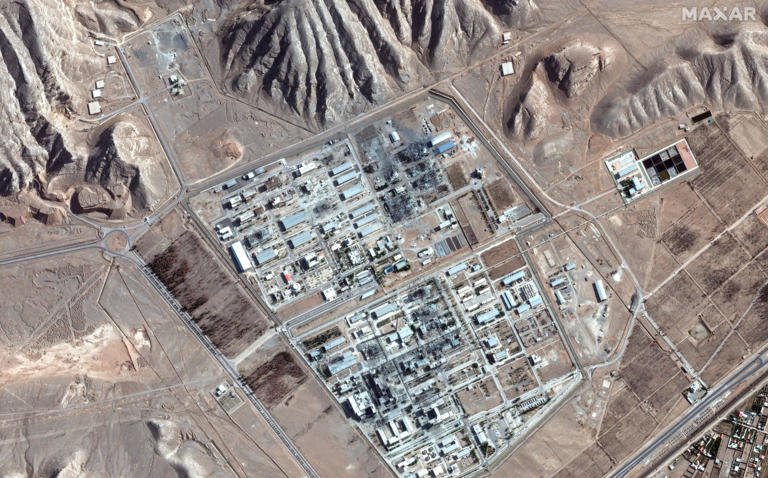
The United States and Israel also struck Iran’s most sensitive nuclear sites. The conflict’s pivotal moment came when the United States struck underground nuclear facilities in Fordow, Natanz, and Isfahan using GBU-57 A/B “bunker buster” bombs — an operation that Trump described as a limited, one-off mission. Al Jazeera
But the results remain deeply contested. A preliminary, low-confidence report from the US Defense Intelligence Agency assessed that Iran had moved much of its stockpile of enriched uranium before the strikes, and that the attacks — which did not collapse the underground facilities — set back Iran’s nuclear capability by only a matter of months. Al Jazeera
The next day, the CIA pushed back. CIA Director John Ratcliffe said new information indicated severe damage to the nuclear facilities that would take years for Iran to rebuild. Al Jazeera
The intelligence community is split. The bunkers may be cracked, or they may still be intact. The enriched uranium may be gone, or it may still be there. That uncertainty is precisely what makes the death-defying nuclear commando mission not just possible — but potentially unavoidable.
The Core Problem: Underground Bunkers That Bombs Can’t Guarantee Destroying
Why Iran’s Nuclear Sites Are So Difficult to Neutralize
Iran did not build Fordow, Natanz, and Isfahan carelessly. These are hardened, deeply buried facilities specifically designed to survive aerial bombardment. Fordow alone is buried under nearly 80 meters of rock — making it among the most fortified nuclear installations on earth.
The GBU-57 “Massive Ordnance Penetrator” is America’s most powerful conventional bunker-buster. It can penetrate roughly 60 meters of reinforced concrete. Even with multiple direct hits, the deepest chambers of these facilities may remain physically intact — and nuclear material stored within them may survive.
Strikes last week on Iran’s nuclear site at Natanz appear to have been intended to seal the entrances to the underground facilities rather than destroy them outright. Those sites are being surveilled to watch for any Iranian attempts to dig them out. Al Jazeera
Sealing a door is not the same as destroying what’s inside. And what’s inside — highly enriched uranium — could eventually be recovered, moved, or weaponized if not physically secured or destroyed.
What a Nuclear Commando Raid Would Actually Look Like
The Mission Concept: Extract, Destroy, or Deny
The raid concept would involve a special operations ground team going in to extract or otherwise neutralize Iran’s stockpile of enriched uranium. Al Jazeera In practice, this means a mission with three possible objectives:
- Extraction — physically removing the nuclear material from Iran and transporting it to a secure location under US or allied control.
- Destruction — rigging the facility and the material with explosives to render it permanently unusable.
- Denial — sealing, contaminating, or otherwise making the stockpile inaccessible to whoever controls Iran after the conflict ends.
Each option carries extreme risk. Each requires boots on the ground in a hostile country, inside an underground fortified facility, surrounded by whatever remains of Iran’s Revolutionary Guard.
How Israel Has Done This Before
Israel has a long history of spectacular air and ground raids and covert intelligence operations that have often targeted nuclear programs in hostile countries, especially in Iran. Al Jazeera
One of the most instructive precedents came in 2024, before the current war began. Israeli forces destroyed an underground ballistic missile factory in Syria built with Iranian assistance. The raiding party was on the ground for approximately two and a half hours, during which time 660 pounds of explosives were rigged throughout the site. Intelligence documents, precision weapons, and equipment were also extracted. Al Jazeera
That operation sent a message that resonated in Tehran: underground facilities are not untouchable. A nuclear commando raid on Iranian soil would be the same message delivered at ten times the scale and consequence.
The US Special Operations Dimension
America’s own history with Iran and commando missions is complicated. The US military has a very complicated relationship with these kinds of operations, dating back to the failed attempt to rescue hostages in Tehran during the 1979 revolution — an operation that exposed critical deficiencies but also drove the development of new special operations capabilities that continue to be studied today. Al Jazeera
But American capacity has grown enormously since 1980. A demonstration of current US capability was provided in January with Operation Absolute Resolve, which resulted in the capture of Venezuelan president Nicolas Maduro from inside a fortress-like military facility. Al Jazeera
If Delta Force and SEAL Team 6 can extract a sitting head of state from a fortified compound in Caracas, the question of whether they can reach Iran’s nuclear stockpile becomes one of logistics and intelligence — not capability.
The Enormous Risks: Why This Mission Could Go Catastrophically Wrong
Risk 1: Iran Moves the Material First
This is the nightmare scenario that already appears to have partially occurred. Intelligence assessments suggest Iran may have moved much of its enriched uranium stockpile before US strikes on Fordow, Natanz, and Isfahan. Al Jazeera If commandos reach the facility and find it empty, the mission fails — and the enriched uranium is now in unknown hands, potentially scattered across multiple hidden locations.
Risk 2: The Facility Is a Trap
Iran’s IRGC has had weeks to prepare defensive positions around its nuclear sites. Any commando team entering these tunnels would be operating in a confined, subterranean environment where the defenders hold every advantage. Ambushes, booby traps, and suicide squads are all realistic threats.
Risk 3: Radioactive Contamination
Destroying or handling highly enriched uranium without specialized equipment can expose operators to lethal radiation. US Army training exercises in chemical, biological, nuclear, and radiological protective gear involve simulated underground facility operations Al Jazeera — but simulation and reality are very different when the enriched uranium is real, the tunnels are collapsing from bomb damage, and IRGC troops are fighting back.
Risk 4: Political and Diplomatic Fallout
A failed commando raid in Iran would be a historic military and political catastrophe. It would energize Iranian resistance, potentially rally regional actors against the US-Israel coalition, and hand Tehran a propaganda victory at the moment they need one most.
Risk 5: Escalation to Weapons Use
If the commandos are on the verge of capture or destruction, the question of whether Iran might use whatever nuclear material it has — or attempt a dirty bomb — becomes horrifyingly real. The death-defying nuclear commando mission exists precisely to prevent this scenario. But executing it badly could trigger the very outcome it was designed to stop.
The Strategic Stakes: Why This Mission Could Actually End the War
Despite the risks, the logic for the nuclear commando raid is compelling — and it is rooted in the core unresolved question of this conflict.
Washington’s stated goals have included degrading Iran’s nuclear program, ballistic missiles, navy, drones, and control over its terror proxies. The US is well on its way to achieving these objectives — more than fifty Iranian naval vessels rest on the sea floor, and Iran’s conventional capabilities are badly degraded. PBS
But the nuclear question remains open. In the June 2025 Twelve-Day War, Israeli and US strikes significantly set back the Iranian nuclear program — but Iranian ambitions to ramp up production of ballistic missiles from roughly 2,000 to 10,000 meant the threat could reemerge within years. PBS
If enriched uranium is left unsecured in Iran after this conflict ends, whatever government or power structure emerges from the wreckage of the current regime could resume nuclear development faster than anyone anticipates. The commando mission is the only way to provide a definitive physical answer to the question: is the nuclear material gone?
Not being able to definitively find, fix, and secure Iran’s stockpile of enriched uranium would make it difficult to achieve the war’s core objective of eliminating Iran’s nuclear weapons capability. Al Jazeera
What Experts Are Saying About the Mission’s Viability
Military and intelligence analysts are divided. The Atlantic Council’s assessment is sobering: Iran perceives this as an existential conflict and does not appear interested in an immediate off-ramp — making this a very different conflict from the Twelve-Day War of 2025, where Iran rapidly de-escalated. PBS
That context matters. A commando raid launched into a country whose remaining forces believe they are fighting for their survival is a fundamentally different mission than one launched against a disorganized, demoralized enemy.
Meanwhile, the Trump administration’s stated war aims have shifted in ways that create what analysts call a strategic dissonance — ranging from surgical nuclear strikes to explicit calls for regime change — leaving the military without a clear benchmark for success. euronews
If regime change is the goal, securing the nuclear material is not the end of the war — it is merely one chapter of it. If nuclear non-proliferation is the goal, a successful commando mission could genuinely be the act that allows both sides to declare something close to victory.
Key Facts: What You Need to Know Right Now
- The 2026 Iran war began on February 28, 2026, with US-Israeli strikes killing Supreme Leader Ali Khamenei
- Iran’s nuclear sites at Fordow, Natanz, and Isfahan have been struck — but their status remains disputed
- US intelligence believes Iran may have moved enriched uranium before the strikes
- A special operations commando raid is being actively considered by US and Israeli planners
- The mission would aim to extract, destroy, or deny Iran’s nuclear stockpile
- Success would likely require two to three hours on the ground inside hostile underground facilities
- Failure could trigger the worst-case scenario: enriched uranium in unknown hands
Conclusion: The Most Dangerous Mission of the 21st Century
The death-defying nuclear commando mission that could end the war is not a hypothetical. It is a live option, being discussed in classified briefings rooms in Washington and Tel Aviv right now, as this war enters its third week with no diplomatic exit in sight.
If successful, it would be the most consequential special operations mission since the raid that killed Osama bin Laden — and arguably more dangerous. If it fails, the fallout would reshape the Middle East, global security, and the future of nuclear non-proliferation for a generation.
The air campaign has done what air campaigns can do. The raid is fraught with risk — but it may become the only way to make sure the nuclear material is safe and out of dangerous hands. Al Jazeera
The question is no longer whether such a mission is being planned. The question is whether the intelligence picture is clear enough, the window is still open, and whether the men who would execute it will be given the order to go.
Stay Informed — This Story Is Moving Fast
Bookmark this page and follow verified defense and intelligence sources for real-time updates as the 2026 Iran war evolves. Share this article with colleagues, policy watchers, and anyone trying to understand what the endgame of this conflict actually looks like. The nuclear commando mission is the story behind the story — and it may define how this war ends.