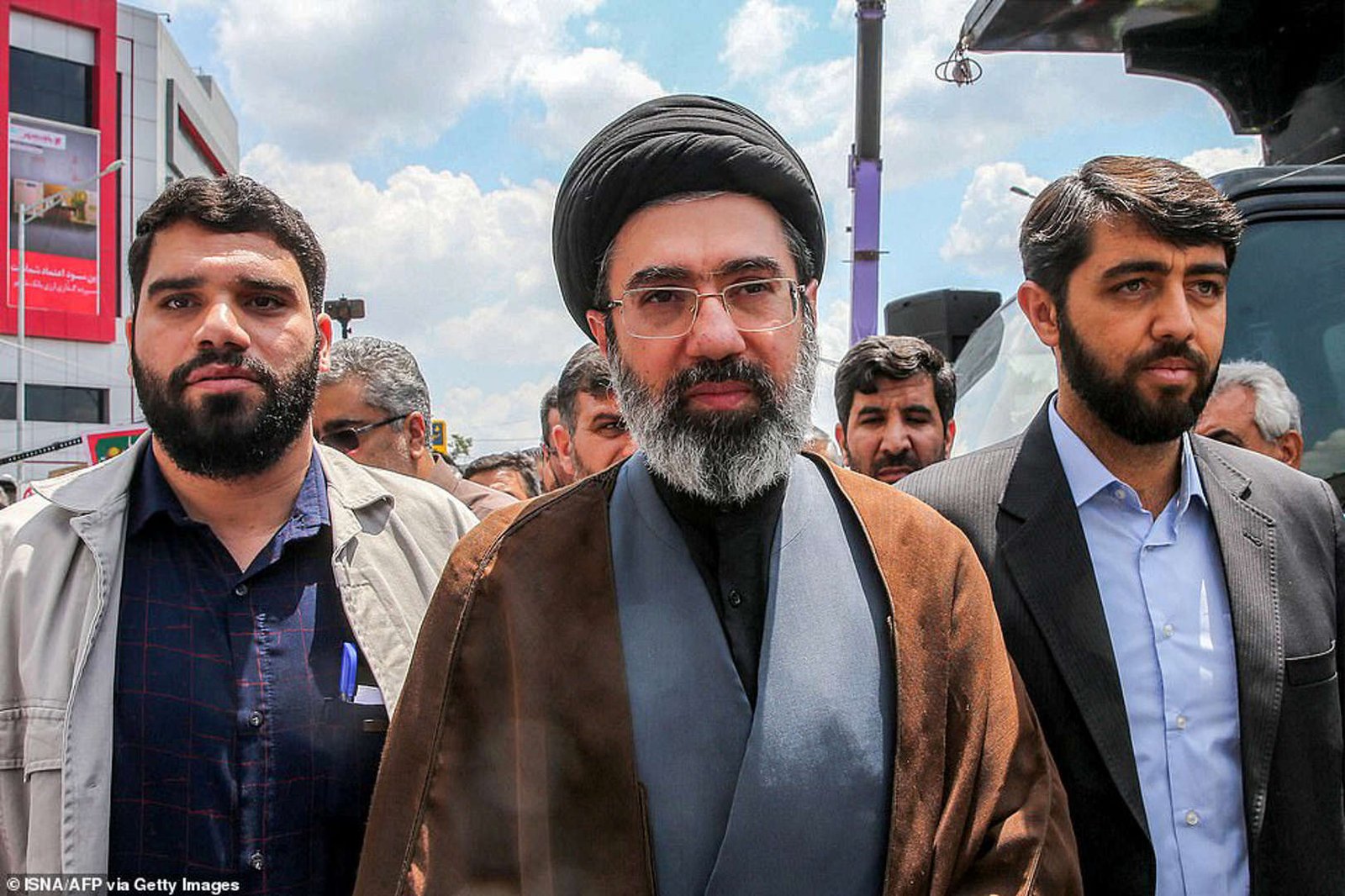
Three weeks into the most consequential military confrontation the Middle East has seen in a generation, Iran’s new Supreme Leader has spoken — and his words have slammed the door on any near-term hope for peace.
Iran’s Supreme Leader Ayatollah Mojtaba Khamenei has rejected proposals for reducing tensions or for a ceasefire with the United States that were conveyed to Tehran by two intermediary countries. His position was not ambiguous. The supreme leader said it was not “the right time for peace until the United States and Israel are brought to their knees, accept defeat, and pay compensation.”
This is not a negotiating position. This is an ultimatum — and understanding it in full requires knowing exactly who issued it, what it means operationally, and what the global consequences are for every country, every market, and every person watching this war unfold.
Who Is Mojtaba Khamenei — The Man Behind the Ultimatum?
The original Supreme Leader, Ali Khamenei, was assassinated on the opening day of the conflict. On February 28, 2026, Ali Khamenei, the supreme leader of Iran, was assassinated in Tehran as part of a series of Israeli airstrikes aimed at high-ranking Iranian officials. Al Jazeera
His son and successor wasted no time establishing a hard line.
On 8 March, Khamenei’s second son, Mojtaba, was designated as Iran’s new supreme leader. The IRGC, as well as Iran’s top leaders, pledged their allegiance to him. Wikipedia
The newly elected supreme leader, Mojtaba Khamenei, was once in the IRGC and was put forward by the unit as the next ayatollah after his father was killed on the first day of the war. Wikipedia This is not a reformer or a diplomat. He is a military man, shaped by the Revolutionary Guard, and his first act in foreign policy confirmed it entirely.
This defiant stance was delivered during his first foreign policy session since assuming power on March 9, 2026, and marks a significant escalation in the ongoing 2026 Iran war. Encyclopedia Britannica
But even his physical status remains disputed. No new images have been released of him since his selection over a week ago by a clerical assembly to replace his father, Ayatollah Ali Khamenei. Wikipedia Trump himself has publicly questioned whether the new supreme leader is even alive or functioning, while his ultimatum continues to shape the battlefield.
The Exact Terms of Khamenei’s Ultimatum
What Iran Is Demanding
The ultimatum is not vague. According to senior Iranian officials with knowledge of the leadership’s position, Tehran’s conditions for ending hostilities are:
- The United States must be “brought to its knees” — a phrase that has appeared consistently across multiple Iranian official statements
- Israel must accept defeat — not a ceasefire, not a pause, but an acknowledgment of defeat
- Both nations must pay reparations — compensation for the damage inflicted on Iran’s infrastructure, its cities, and its people
- A guarantee of non-repetition — a binding commitment that the US and Israel will never again launch such strikes
Iran’s foreign minister confirmed the position publicly: “We don’t ask for ceasefire, but this war must end, in a way that our enemies never again think about repeating such attacks,” adding that Iran was prepared to continue the fight as long as necessary. The War Zone
This framing is significant. Iran is not asking to stop fighting. It is asking to win.
The Strait of Hormuz as a Weapon
Alongside the political ultimatum, Iran has weaponized one of the world’s most critical waterways.
Mojtaba Khamenei, the new Supreme Leader, said the Strait of Hormuz would continue to be closed as a tool to pressure the US. Wikipedia
The economic consequences of that single decision are staggering. The International Energy Agency and major consuming nations have taken the extraordinary step of releasing 400 million barrels from strategic reserves, the largest such intervention in the agency’s history, with the IEA estimating global supply could fall by 8 million barrels per day in March as production across the Middle East is curtailed and shipping through Hormuz slows to a fraction of normal levels. The War Zone
The Context: What Preceded the Ultimatum
The Assassination That Changed Everything
To understand why this ultimatum is so sweeping, you have to understand the shock that preceded it.
The United States and Israel launched coordinated military operations against the Iranian regime on February 28, 2026. The action focused on the regime’s nuclear facilities, military infrastructure, and leadership, following a conclusion reached in Washington and Jerusalem that diplomacy had been exhausted, and that a nuclear-armed Iran posed an unacceptable security threat to America, Israel, America’s Arab allies, and the world. Wikipedia
Iranian President Masoud Pezeshkian said that the Supreme Leader Ali Khamenei had been killed “at the hands of the most wicked villains in the world,” and that “the Islamic Republic of Iran considers bloodshed and revenge against the perpetrators and commanders of this historical crime as its duty and legitimate right.” Al Jazeera
Khamenei’s daughter, granddaughter, son-in-law, and daughter-in-law were also killed in the strikes on his compound. Al Jazeera For Mojtaba Khamenei, this is not abstract geopolitics. His father, sister, and extended family were killed. This is personal — and it shows in the absolutism of the ultimatum he has delivered.
Diplomacy Was Within Reach — Then Was Abandoned
The most painful dimension of this conflict is how close it came to a different outcome.
The attacks followed the failure of indirect negotiations in February on a new agreement to curtail Iran’s nuclear programme. The mediating Omani foreign minister had stated significant progress, with Iran willing to make concessions, but President Trump said he was “not thrilled” with the talks. Inc
Trump lamented to The Atlantic that Iran did not speak to him earlier, saying: “They should have done it sooner. They should have given what was very practical and easy to do sooner. They waited too long.” NBC News
Two weeks later, the man who could have signed that agreement is dead, his son is the supreme leader, and the terms on offer are now American surrender or endless war.
The Military Picture Behind the Ultimatum
Iran’s Asymmetric Strategy Is Working
Despite suffering devastating airstrikes on its military infrastructure, nuclear facilities, and senior leadership, Iran has not capitulated. It is not even close. The reason lies in its deliberate pivot to asymmetric warfare.
Iran has adopted asymmetric tactics — such as disrupting the critical Strait of Hormuz and threatening US banking-linked entities — to inflict as much economic pain on the region and wider world as it can. Wikipedia
To regain some leverage even as the country remains under bombardment, Tehran is deploying its time-tested strategy of escalating strikes on its neighbors’ energy and economic infrastructure in the hopes of creating pressure and incentives for diplomacy. PBS
The results speak for themselves. Oil is above $100 a barrel. Gulf states that house US military forces are being struck regularly. The UAE ordered nationwide remote schooling. Qatar’s capital heard explosions for multiple consecutive days. And now a new front may be opening.
Iran Is Studying New Fronts
Khamenei stated that Iranian officials were studying the possibility of expanding the war into additional fronts where adversaries were vulnerable, saying “studies have been conducted regarding the opening of other fronts in which the enemy has little experience and is highly vulnerable,” and that “activating them will take place if the state of war continues and if it serves our interests.” The War Zone
That sentence alone should focus the attention of every intelligence agency in the world. Iran is not describing a defensive posture. It is describing offensive planning.
The International Response: Who Is Siding With Whom?
Those Condemning the US-Israel Campaign
The international reaction to the strikes and the ultimatum has fractured global alliances along unexpected lines.
China’s Foreign Minister Wang Yi called the US-Israeli attack on Iran “unacceptable,” and condemned “the blatant killing of a sovereign leader and the incitement of regime change.” Al Jazeera
The Iranian Government condemned the US-Israel attacks as a breach of the UN charter and said it would exercise the right to self-defence. Inc
Meanwhile, even traditionally allied nations have drawn lines. Japan, Australia, Germany, Greece, the UK, Italy, the Netherlands, and the European Union ruled out getting involved in the Israel-US war on Iran. Inc
The Pope Calls for Ceasefire
Pope Leo XIV has urged a ceasefire in the Middle East and called on leaders in the Iran war to reopen talks. Wikipedia That appeal, from the moral authority of the Catholic Church, underscores just how far the global consensus against this conflict has spread — and how isolated the US-Israel coalition now finds itself.
The War Powers Fight in Washington
At home, the legitimacy of the war is also under challenge. With Congress voting on a war powers resolution to halt Trump’s assault on Iran, Sen. Tim Kaine said: “This is an illegal war. The Constitution says no declaration of war without Congress.” NBC News
A war waged without congressional approval, opposed by allies, condemned by China, and now met by an ultimatum from a new supreme leader who demands unconditional surrender — this is the landscape the administration faces.
What the Ultimatum Means for You: A Practical Guide
Whether you are a business leader, an investor, a traveler, or simply someone trying to navigate the world’s most turbulent geopolitical moment, Khamenei’s ultimatum has direct practical implications.
For Investors and Energy Markets
- Oil price volatility will continue as long as the Strait of Hormuz remains disrupted — hedge accordingly
- Strategic reserve releases by the IEA provide temporary relief but are not a long-term solution
- Gulf-exposed equities face elevated risk as Iranian strikes on regional economic infrastructure continue
- Currency and inflation risks are rising globally due to supply disruptions — consult a financial advisor on near-term exposure
For Businesses Operating in the Gulf
- Review operational continuity plans — the IRGC has explicitly named US-linked commercial targets
- Assess cyber vulnerability — Iran’s cyber units are active and the financial sector is a named priority target
- Coordinate with government advisories — DHS, State Department, and local embassy guidance is being updated regularly
- Prepare for extended disruption — the ultimatum signals that no quick diplomatic resolution is on the horizon
- Document force majeure conditions — contractual protections may need to be invoked if operations are disrupted
For Travelers and Expatriates
- Avoid all non-essential travel to the Gulf region until the security situation stabilizes
- Register with your country’s embassy if you are already in the region
- Follow real-time travel advisories — the situation on the ground can change within hours
- Have contingency evacuation plans, including overland routes if air corridors close
Is There Any Off-Ramp? What Analysts Are Saying
Analysts say speculation from Washington that Iran would quickly submit after the killing of Supreme Leader Ayatollah Ali Khamenei were misguided. Tehran is likely going to determine the end of this war, not the US or Israel, because of its ability to inflict economic pain broadly. Wikipedia
Wars rarely go according to plan. In launching a war of choice with Iran, the United States and Israel have unleashed a confrontation that is unlikely to succeed and certain to produce unintended effects that they will be unable to manage or contain. PBS
Meanwhile, President Trump has sent mixed signals of his own. Trump told Axios that the war on Iran would end “soon” because there’s “practically nothing left to target,” adding “anytime I want it to end, it will end.” Wikipedia That confidence, however, stands in direct contradiction to an ultimatum from Tehran that demands American defeat as the price of peace.
Iran’s foreign minister reinforced that the gap between these positions is not bridgeable by conventional diplomacy alone. He said Iran had endured a difficult year but had resisted what he described as attempts by its adversaries to force Tehran into an unconditional surrender. The War Zone
Conclusion: The World Is Waiting for Someone to Blink
Khamenei’s ultimatum to the US and Israel following the strikes is the clearest signal yet that this war will not end quickly, cleanly, or cheaply for anyone involved.
A new supreme leader, shaped by the Revolutionary Guard, grieving his father and family, and backed by an institution that has survived four decades of sanctions, wars, and internal protests, has told the world: we will not stop until you are on your knees.
The deeply embedded networks and institutions that have underpinned the Islamic Republic for nearly half a century ensure that, at least in the near term, the vestiges of the power structure will survive, even as airstrikes have powerfully degraded Iran’s military capabilities. PBS
The ultimatum has been issued. The terms are unacceptable to Washington and Jerusalem. And the world — its oil markets, its shipping lanes, its financial systems, and its diplomatic institutions — is holding its breath waiting to see who, if anyone, will find a path out.