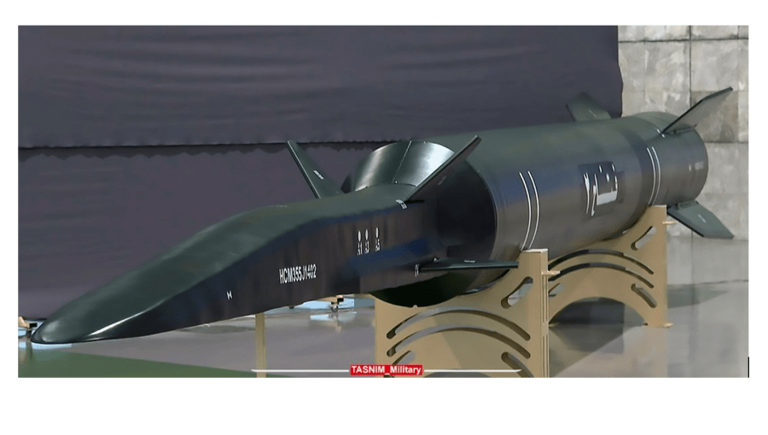
For decades, Iran’s missile program was described by Western analysts with a consistent caveat: impressive in quantity, questionable in quality. Long-range but inaccurate. Numerous but interceptable.
That assessment just changed — permanently.
On March 4, 2026, six days into the US-Israel war on Iran, the Islamic Revolutionary Guard Corps deployed a weapon that no country in the Middle East had ever used in combat before: Iran reportedly launched the Fattah-2 hypersonic glide vehicle, marking the first operational use of such technology in the Middle East.
It was not a test. It was not a demonstration. It was a live combat strike — and the target was carefully chosen to send the clearest possible message.
Iran has reportedly used its new hypersonic gliding missile, the Fattah-2, against a fortified Israel Defense Forces command center, killing seven senior officers and numerous others.
The age of hypersonic warfare in the Middle East has begun. And for US military planners, Israeli air defense operators, and every government watching this conflict, the implications are profound.
What Is the Fattah-2? Iran’s Most Advanced Weapon Explained
The Basics: Speed, Range, and Maneuverability
Iran’s Fattah-2 hypersonic glide vehicle travels at Mach 15 — roughly 18,500 kilometres per hour. It uses a liquid-fuel engine to change trajectory mid-flight, making radar tracking incredibly difficult for standard air defense platforms. The White House
To put Mach 15 in perspective: a commercial aircraft cruises at roughly Mach 0.85. A standard intercontinental ballistic missile reentry vehicle travels at approximately Mach 20 — but in a predictable arc. The Fattah-2 travels at Mach 15 while maneuvering — and that combination of speed and unpredictability is precisely what makes it so dangerous.
The precision-guided missile has an operational range of 1,500 kilometres. This radius places United States military bases in the Gulf and naval assets in the Arabian Sea within potential striking distance. The White House
Measuring 12 metres in length, the road-mobile weapon carries a 200-kilogramme explosive payload. The White House
The road-mobile design is critical. It means the launcher can be moved, hidden, dispersed, and repositioned between strikes — making it extraordinarily difficult to locate and destroy before it fires.
What Makes It “Hypersonic” — and Why That Word Matters
The term “hypersonic” is often misused in defense reporting, so it is worth being precise here.
A hypersonic missile is generally defined as a weapon capable of traveling at speeds above Mach 5 — five times the speed of sound. While many conventional ballistic missiles also reach hypersonic speeds during parts of their trajectory, the defining feature of modern hypersonic systems is not speed alone but how they travel. Unlike traditional ballistic missiles, which follow a largely predictable arc once launched, hypersonic systems are designed to maneuver during flight. They can adjust direction after launch and may travel at lower altitudes than typical ballistic paths. This combination of high velocity and in-flight maneuverability complicates detection, tracking, and interception. PBS
While Iran had previously deployed the Fattah missile with a maneuverable reentry vehicle, the Fattah-2 — first used on February 28, 2026 — is Iran’s only missile equipped with a true hypersonic gliding warhead. Wikipedia
This distinction matters enormously. The earlier Fattah-1 was a capable weapon with terminal-phase maneuvering. The Fattah-2 is a genuine hypersonic glide vehicle — a fundamentally different and far more dangerous class of weapon.
The Combat Debut: What the Fattah-2 Has Already Done
Strike on the IDF Command Center
The Fattah-2 strike demonstrates not only precision targeting but also the missile’s ability to gather intelligence within Israel. Wikipedia The choice of an IDF command center as the first operational target was deliberate — Iran was not just trying to inflict casualties. It was demonstrating that its most advanced weapon can penetrate hardened, high-value military facilities.
Killing seven senior officers in a single strike against a fortified command center is not a lucky hit. It is a demonstration of precision capability that Western analysts had not fully credited Iran with possessing.
Use Against US Forces
Iran has reportedly used its Fattah-2 hypersonic missile for the first time in combat, targeting US forces amid intensifying hostilities in the region. An Iranian military source confirmed the advanced missile system was deployed during the latest wave of retaliatory strikes following coordinated US-Israel attacks on key Iranian facilities. The reported deployment of the Fattah-2 adds a new dimension to the conflict and raises concerns about the vulnerability of US military assets stationed across the Middle East. NBC News
The significance of this cannot be overstated. A hypersonic glide vehicle has been used against United States military forces in combat for the first time in history. The United States military, for all its technological dominance, is now operating in a theater where the enemy has weapons that challenge its most advanced air defense systems.
The Kheibar Shekan: Iran’s Other Advanced Missile in Play
The Fattah-2 is not the only advanced missile Iran has deployed in this conflict. The Kheibar Shekan has also been used against high-value targets.
On March 2, 2026, Iran’s IRGC claimed it fired “Khyber” missiles at senior Israeli government and military positions, including near Netanyahu’s office. The Kheibar Shekan is considered Iran’s third-generation solid-fuel MRBM. It reportedly has a range of 900 miles and uses satellite-aided guidance and maneuverable warheads to improve accuracy while reducing the predictability of intercepts. Solid-fuel design allows mobility and rapid launch, enabling dispersed salvo attacks meant to overwhelm upper-tier missile defenses. Al Jazeera
Iran is not deploying one advanced weapon. It is deploying a layered suite of advanced weapons simultaneously, designed to overwhelm defenses through both quality and quantity.
Why Iran’s Hypersonic Missile Changes the Defense Calculus
The Interception Problem
Missile defense systems such as Patriot and THAAD are built around calculating the trajectory of incoming projectiles. If a missile follows a predictable path, interceptors can be launched to collide with it using kinetic force. The effectiveness of these systems depends heavily on reliable tracking and trajectory estimation. PBS
The Fattah-2 attacks both of those assumptions simultaneously. At Mach 15, it gives defenders approximately four to five minutes of warning time from launch to impact at maximum range. During that window, it is actively maneuvering — changing altitude and direction in ways that break the trajectory models that interceptors depend on.
US and Israeli air defense systems face extreme challenges intercepting such weapons. Hypersonic gliders maneuver at altitudes of several thousand kilometers at extreme speeds, making them nearly invulnerable. Wikipedia
Yuval Beiski, Vice President of Israeli defense technology company Rafael Advanced Defense Systems, called hypersonic missiles “a new era in air defense,” proposing a zone-based model where multiple interceptors neutralize threats as they approach. Wikipedia
That proposed solution — layered interception zones with multiple interceptors per incoming missile — is logical but enormously resource-intensive. Each interceptor costs far more than each hypersonic missile. Iran can fire many; Israel and the US have a finite supply of interceptors.
Can the USS Abraham Lincoln Stop a Fattah-2?
This is the question US Navy planners are asking right now, with multiple carrier strike groups operating in the region.
The USS Abraham Lincoln is a Nimitz-class nuclear-powered aircraft carrier that sails at speeds exceeding 25 knots. It constantly changes direction, turning the warship into a highly elusive target for long-range ballistic weapons. The aircraft carrier never travels alone and relies on escort cruisers and destroyers equipped with the Aegis combat system. These warships use advanced long-range radars to detect and track incoming hypersonic or ballistic threats well out at sea. To neutralize incoming attacks, the strike group deploys the RIM-174 Standard Missile 6 (SM-6). The inner defense rings also use electronic warfare to jam the communication links and guidance sensors of incoming projectiles. The White House
The assessment from defense analysts is cautiously optimistic but not reassuring: a single Fattah-2 strike is highly unlikely to breach the carrier’s layered shield. The White House
The qualifier “single” is doing a lot of work in that sentence. Iran has demonstrated it fires missiles in salvo — not one at a time.
Iran’s Full Missile Arsenal: The Bigger Picture
The Fattah-2 does not exist in isolation. It sits at the apex of an arsenal that defense analysts describe as the largest and most diverse in the Middle East.
Following Operation Epic Fury beginning February 28, Iran launched more than 2,400 missiles and drones within roughly ten days, according to Western intelligence estimates. Although US and Israeli officials claim that about one-third of Iran’s mobile launchers have been destroyed or disabled, the scale of the salvos has still inflicted significant damage on energy infrastructure and logistics facilities across the Gulf region. Inc
The full arsenal, from the ground up, looks like this:
Short-Range Systems (150–800 km):
- Core systems include the Fateh variants: Zolfaghar, Qiam-1 and older Shahab-1/2 missiles — proven liquid-fuel systems designed for nearby military targets and rapid regional strikes. euronews
Medium-Range Systems (800–2,000 km):
- The Sejjil — a premier solid-fuel missile capable of 2,000 km range with rapid launch capability
- The Khorramshahr — known for heavy payload capacity with variants at Iran’s stated maximum range
- The Kheibar Shekan — third-generation solid-fuel MRBM with satellite guidance and maneuverable warheads
Hypersonic Systems:
- On paper, Iran fields two operational hypersonic missiles — Fattah-1 and Fattah-2. The Fattah series features a second stage with aerodynamic controls and a maneuverable nozzle that emulates a maneuverable re-entry vehicle. Al Jazeera
The Underground Fortress Behind Them All: To counter Western air superiority, Iran has spent years constructing so-called “Missile Cities” — hardened underground facilities located in regions such as Kermanshah and Semnan. These complexes contain concealed launch platforms and extensive storage tunnels, allowing missiles to be fired from protected sites and complicating attempts by the US and Israel to neutralize the arsenal through a single decisive strike. Inc
The Sustainability Question: Is Iran Running Out?
As of March 10, 2026, the sustained rate of fire appears to be placing strain on Iran’s missile inventories. Several intelligence assessments suggest Tehran is increasingly relying on cheaper loitering drones and short-range systems as supplies of more sophisticated medium-range missiles begin to diminish. Inc
This is a critical data point for understanding how the conflict evolves. Iran has fired more than 2,400 missiles and drones in under two weeks. Even the largest arsenal has limits. The shift toward drones and short-range systems suggests the high-end inventory — including the Fattah-2 — is being conserved for the highest-value targets.
Following the Twelve-Day War of June 2025, Tehran had prioritized the replenishment of solid-fuel systems like the Fateh-110 and the Kheibar Shekan, utilizing hardened “missile cities” to survive Israeli and US counter-TEL operations. Al Jazeera
Iran spent the period between the June 2025 conflict and February 2026 rebuilding. The question now being assessed in real time is how much of that rebuilt stockpile remains after seventeen days of combat — and how many Fattah-2s are still in the inventory.
What Iran’s Hypersonic Missile Debut Means Practically
Whether you are a defense professional, a policy analyst, a business leader, or simply a citizen trying to understand this conflict, the Fattah-2’s combat debut has direct practical implications:
For Defense and Security Professionals:
- Reassess interception assumptions — the Fattah-2’s combat performance against a hardened IDF command center requires a fundamental review of terminal-phase defense doctrine
- Plan for salvo attacks, not single strikes — Iran’s operational pattern is mass fire, not precision single-shot; defense systems must be resourced accordingly
- Prioritize counter-TEL operations — the road-mobile launcher is the Fattah-2’s most exploitable vulnerability; finding and destroying them before launch remains the most viable defense
- Invest in SM-6 and next-generation interceptor stockpiles — the cost-exchange ratio favors Iran if interceptor inventories are not maintained at adequate levels
- Study the zone-based interception model proposed by Rafael’s Beiski — layered, coordinated interception across multiple altitude bands is the most promising defensive architecture
For Policy Analysts and Governments:
- The Fattah-2’s combat debut marks a permanent proliferation threshold — other regional actors will now seek comparable technology
- The Russia-Iran technology transfer question deserves urgent investigation — the missile’s trajectory and speed resemble Russia’s Oreshnik used in Ukraine, Wikipedia raising serious questions about the origins of Iran’s hypersonic glide technology
- Export control regimes covering hypersonic components and materials need immediate review given what Iran has demonstrated in combat conditions
For Businesses with Gulf Exposure:
- US military asset vulnerability to hypersonic strikes increases the unpredictability of the conflict’s duration and scope — factor this into contingency planning
- Energy infrastructure across the Gulf is now within range of a weapon that existing air defense systems cannot reliably stop — review insurance and supply chain exposure
- Cyber and physical security at US-linked facilities in the region remain elevated-risk targets alongside the military ones
The Global Race This Debut Just Accelerated
Iran’s operational use of a hypersonic glide vehicle is not just a Middle East story. It is a global technology story with profound long-term consequences.
The United States, Russia, and China have all been developing hypersonic weapons for years. The Fattah-2 strike demonstrates not only precision targeting but also the missile’s ability to gather intelligence within Israel. Wikipedia The fact that Iran — a country under decades of sanctions, isolated from Western technology supply chains, and with a fraction of the defense budget of major powers — has operational hypersonic weapons in combat is a warning signal to every defense ministry on earth.
The question of how to defend against these weapons is now urgent — not theoretical.
Yuval Beiski of Rafael Advanced Defense Systems called this “a new era in air defense.” Wikipedia He is right. And that new era began not in a test range but on a battlefield, over the skies of Israel, on March 4, 2026.
Conclusion: The Missile That Rewrote the Rules
Iran’s debut of the Fattah-2 hypersonic missile in live combat is one of the most significant military technology milestones of the 21st century. Not because hypersonic weapons are new — Russia and China have them too. But because a country under comprehensive international sanctions, fighting a war against two of the world’s most capable military forces, has demonstrated that it can develop, produce, and operationally deploy a weapon that challenges every air defense system in the region.
The Fattah-2 is fast. It maneuvers. It kills. It is road-mobile and survivable. And Iran has used it against both Israeli and US military targets in the same week.
The calculus for this war — and for the entire regional security architecture — has permanently shifted. The weapons that were supposed to deter this conflict have now been used in it. And the defenses that were supposed to stop them are being stress-tested in real time.
Whatever happens next in this conflict, the world just learned something irreversible: hypersonic missiles are no longer the exclusive club of the superpowers. They are on the battlefield in the Middle East, in Iranian hands, and they are working.