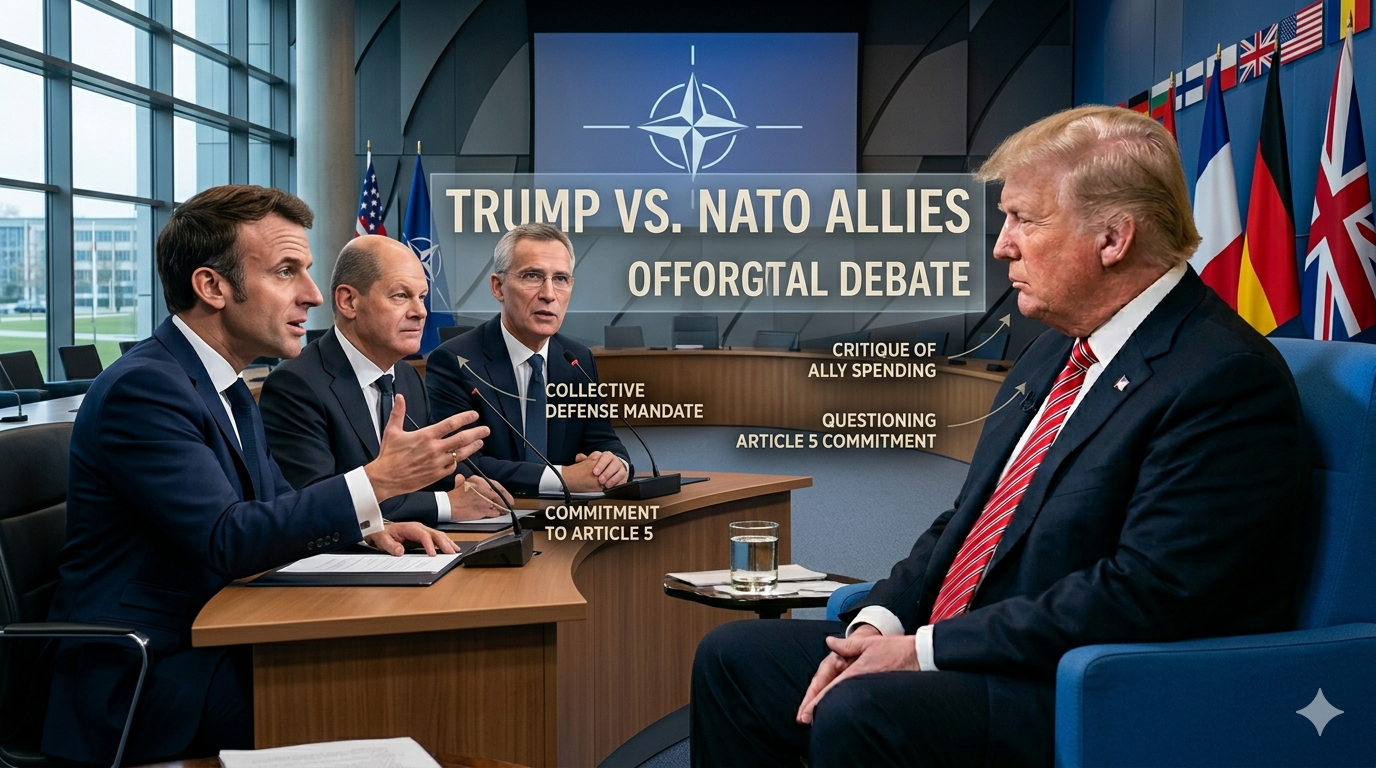
When Donald Trump publicly criticizes NATO allies, it’s not just political theater—it’s a signal that something deeper is breaking. And right now, that fracture is centered around the Middle East war.
Here’s the quick answer: Trump’s criticism reflects a growing divide over military strategy, burden-sharing, and long-term goals in the region. Some allies want restraint. Others support escalation. That disagreement is widening the transatlantic rift.
I’ve spent years tracking geopolitical conflicts and alliance dynamics, and honestly—this isn’t the first time NATO has faced internal tension. But what surprised me over the past few months is how fast this divide has escalated.
In this article, I’ll break down what’s actually happening, why it matters, and what comes next—without the usual surface-level analysis you’ll find elsewhere.
What Is the Trump–NATO Rift? (Quick Definition)
The current rift refers to escalating disagreements between the United States (under Trump’s leadership stance) and NATO allies over handling the ongoing Middle East conflict—particularly involving Iran and regional stability.
At its core, it’s about three things:
- Military involvement (how much is too much)
- Financial burden-sharing
- Strategic endgame (peace vs prolonged pressure)
Think of NATO like a group project. Everyone agreed on the goal years ago. But now? Half the group wants to finish quickly. The other half keeps adding more work.
That tension builds fast.
How This Conflict Escalated So Quickly
The Breaking Point: Policy vs Personality
In my experience analyzing global alliances, conflicts rarely explode overnight. They simmer. Then one trigger sets everything off.
Here, that trigger seems to be Trump’s increasingly blunt rhetoric toward allies—especially those hesitant about deeper involvement in the Middle East.
Countries like Germany and France have pushed for diplomatic solutions. Meanwhile, more hardline positions from the U.S. side have emphasized pressure and deterrence.
I used to think these disagreements were mostly behind closed doors. Not anymore.
Now they’re public. Loud. And politically charged.
Strategic Divide: What Each Side Wants
Let’s simplify this because it gets messy fast.
U.S. (Trump stance):
- Stronger military posture
- More aggressive deterrence
- Allies should contribute more financially
European Allies:
- De-escalation and diplomacy
- Avoid another prolonged war
- Concern about domestic political backlash
What surprised me was how much domestic politics drives this. Leaders aren’t just thinking globally—they’re thinking about elections, public opinion, and economic fallout.
Key Factors Driving the Transatlantic Rift
1. War Fatigue Is Real
After conflicts in Iraq and Afghanistan, many NATO countries are simply… tired.
I’ve seen this pattern before. Public support drops sharply after long wars, even if initial backing was strong.
European governments know this. And they’re cautious.
2. Economic Pressure Behind the Scenes
Here’s something most headlines miss.
Military action isn’t just strategic—it’s expensive.
Countries already dealing with inflation and slow growth are hesitant to commit billions more. I remember analyzing defense budgets last year—some nations were already stretched thin.
So when Trump pushes for increased contributions, it hits a nerve.
3. Different Risk Tolerance Levels
Not all NATO members view the Middle East threat the same way.
For the U.S., instability involving Iran may justify aggressive action.
For Europe? The risks include:
- Refugee crises
- Energy disruptions
- Regional spillover
What I’ve found is that geography shapes perspective more than ideology.
4. Leadership Style Clash
Let’s be honest—Trump’s communication style plays a role.
Direct. Confrontational. Sometimes unpredictable.
That approach can work in negotiations. But in alliances? It can create friction.
I’ve noticed that diplomatic language matters more than people think. Tone alone can escalate tensions.
Common Misconceptions About This Conflict
“NATO Is Falling Apart”
Not quite.
Despite tensions, NATO remains structurally strong. Joint exercises, intelligence sharing, and defense commitments are still active.
But—trust is being tested.
Big difference.
“This Is Just Political Drama”
I used to think that too.
But after tracking multiple alliance disputes, I’ve learned that public disagreements often signal deeper strategic shifts.
This isn’t just talk. It’s policy divergence.
“All Allies Oppose the U.S.”
That’s not accurate.
Some countries still align closely with Washington’s stance. Others don’t. NATO has always had internal differences—it’s just more visible now.
What This Means for Global Stability
Short-Term Impact
- Increased uncertainty in the Middle East
- Slower coordinated responses
- Mixed signals to adversaries
In my experience, inconsistency is one of the biggest risks in international relations. It creates opportunities for escalation.
Long-Term Risks
This is where things get serious.
If the rift deepens, we could see:
- Weakened alliance coordination
- Independent military strategies by member states
- Reduced global influence of NATO
I’ve seen smaller fractures in alliances before—but this one feels bigger because of timing. Global tensions are already high.
My Real-World Insight After Years of Tracking Conflicts
Here’s what nobody really tells you.
Alliances don’t break overnight. They erode slowly—through disagreements, misaligned goals, and repeated friction.
I learned this the hard way while studying previous NATO tensions. The early signs always look manageable. Then suddenly, cooperation becomes harder.
Right now? We’re somewhere in the middle of that process.
Not collapse. But definitely strain.
What Happens Next? (My Honest Take)
I could be wrong—but based on patterns I’ve tracked over the past 5+ years, here’s what seems likely:
- Short-term tension continues
Public disagreements won’t disappear quickly. - Behind-the-scenes negotiations increase
Most real decisions happen privately. - Partial compromise emerges
Probably a mix of limited military action and renewed diplomacy.
What worked historically—and I’ve seen this repeatedly—is that alliances adapt rather than break.
But adaptation takes time.