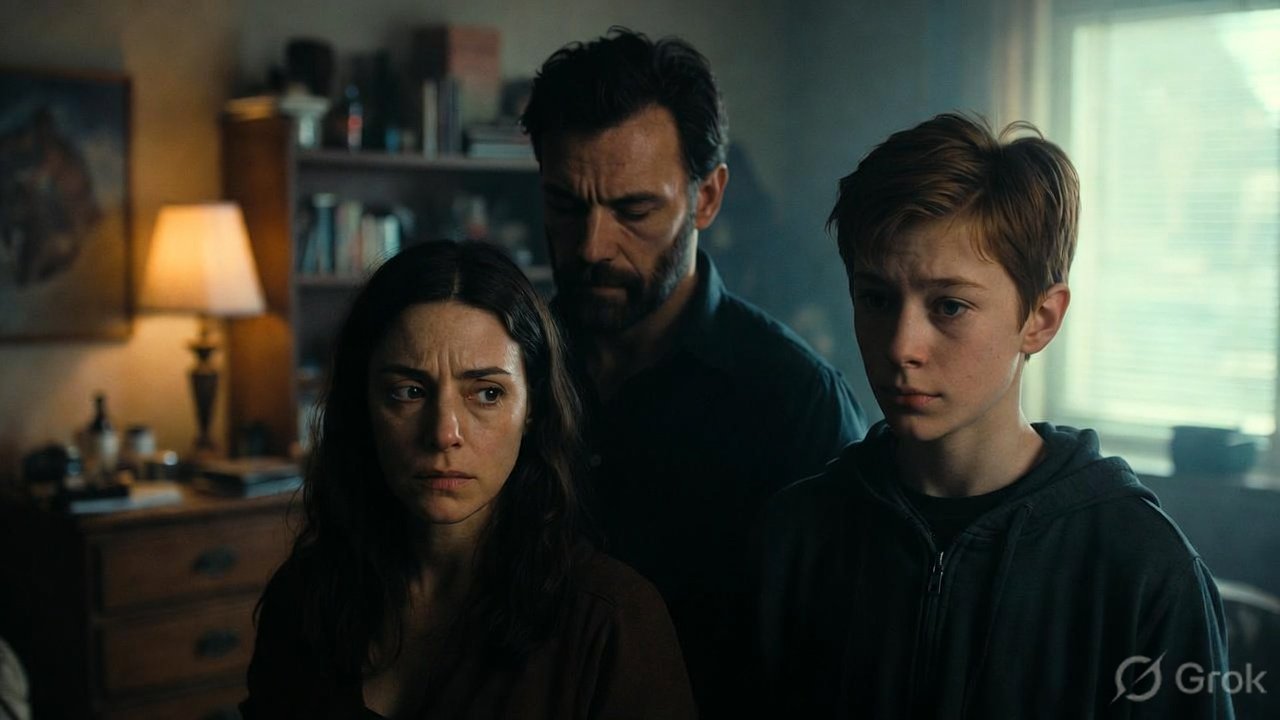
Introduction: When “Family First” Becomes Family Fractured James Dobson built a media empire on the idea that strong families are the foundation of a strong society. His organization, Focus on the Family, shaped the parenting philosophy of millions of evangelical Christian households across America. But for some who grew up inside those households — the so-called “Dobson kids” — the experience tells a very different story.
For some Dobson kids, focusing on the family led to estrangement. Not connection. Not the close-knit, faith-rooted bonds that the books and radio broadcasts promised. Instead, many adult children raised under strict, authority-centered, religiously conservative parenting frameworks report fractured relationships, painful distance, and the difficult choice to cut ties with parents who believed they were doing everything right.
This isn’t an attack on faith or conservative values. It’s an honest look at what happens when rigid parenting ideologies — no matter how well-intentioned — fail to adapt to the real, complex emotional needs of children. And it’s a conversation that deserves to be had openly.
What Is a “Dobson Kid”?
The term “Dobson kid” refers broadly to children raised under the parenting philosophy promoted by James Dobson, founder of Focus on the Family. Dobson’s teachings — spread through books like Dare to Discipline and decades of radio programming — emphasized:
- Strong parental authority
- Biblical obedience and submission to parents
- Physical discipline (spanking) as a primary correction tool
- Clear gender roles within the family
- Religious instruction as the cornerstone of child-rearing
Millions of parents adopted these principles with genuine love and good intentions. But the outcomes were not always what the framework promised.
Why Focusing on the Family Sometimes Led to Estrangement
1. Obedience Over Emotional Connection
One of the central tensions in Dobson-style parenting is the emphasis on compliance. Children were expected to obey — quickly, completely, and without question. While structure matters in healthy families, obedience-first frameworks can leave little room for emotional attunement.
Children who grew up in these environments often report feeling:
- Unheard when they disagreed or questioned rules
- Punished for expressing emotions deemed inappropriate
- Valued for their behavior rather than their personhood
- Unable to form a secure emotional attachment because vulnerability felt unsafe
When children grow into adults, those patterns don’t simply disappear. Adults who never felt emotionally seen as children often reach a breaking point — and estrangement becomes the result.
2. Shame as a Discipline Tool
Dobson’s framework drew heavily on concepts of sin, moral failure, and the need for correction. For many children, this translated into an environment where shame was frequently used — intentionally or not — as a behavior management tool.
Chronic shame in childhood has well-documented psychological effects:
- Difficulty trusting others in adulthood
- Higher rates of anxiety and depression
- Tendency toward perfectionism or self-destruction
- Damaged self-worth that persists for decades
When adult children begin therapy or self-reflection and start naming these dynamics, they often confront a painful reality: the family environment that was meant to protect them caused harm. Choosing distance becomes an act of self-preservation.
3. LGBTQ+ Identity and Religious Rejection
Focus on the Family has historically taken strong stances against LGBTQ+ identities. For children who grew up LGBTQ+ in Dobson-influenced homes, the experience often involved:
- Being told their identity was sinful or disordered
- Exposure to conversion therapy practices
- Fear of rejection if they came out
- Actual rejection when they did
It is impossible to overstate how devastating religious rejection feels for a child who came out to a parent. Many adult children in this situation report that estrangement wasn’t their first choice — it was the only option left after repeated attempts to reconcile their identity with their family’s beliefs failed.
4. The “Biblical Discipline” Debate
Dobson was an outspoken advocate for spanking as a legitimate and even morally necessary parenting tool. While views on physical discipline vary widely, the research landscape has shifted significantly. Decades of studies now consistently link corporal punishment with:
- Increased aggression in children
- Poorer mental health outcomes
- Weakened parent-child relationships over time
- Higher rates of adult anxiety and depression
For some Dobson kids, the physical discipline they experienced as children crossed lines they only recognized in adulthood — lines that made repairing those relationships feel impossible without accountability from parents.
5. The Pressure to Perform Faith
In Dobson-influenced households, faith wasn’t simply personal — it was performative and mandatory. Children were expected to pray, attend church, espouse correct beliefs, and model evangelical values publicly.
When adult children deconstruct their faith — a process sometimes called “faith deconstruction” — they frequently face family responses that include:
- Grief treated as moral failure
- Pressure to return to the church
- Spiritual manipulation (“I’ll pray for you”)
- Conditional love tied to religious conformity
Estrangement often follows not because adult children hate their parents, but because every interaction becomes a battleground for their spiritual autonomy.
The Parent’s Perspective: Where It Goes Wrong
It’s worth acknowledging that the vast majority of parents who followed Dobson’s teachings did so out of love. They believed they were protecting their children, raising them with values, and preparing them for life.
But love without attunement isn’t always enough. Many of these parents made the following mistakes — not out of malice, but out of deeply embedded ideology:
- Prioritizing correctness over connection. Being right about rules mattered more than being present for the child.
- Confusing compliance with relationship. A child who obeys is not necessarily a child who feels loved.
- Equating emotional distance with strength. Some Dobson-influenced homes discouraged emotional expression as weakness or indulgence.
- Refusing accountability. Parents who believe they were following God’s instruction often struggle to accept that the method caused harm.
Understanding this doesn’t excuse harm. But it does help explain why many parents are genuinely blindsided by estrangement from children they feel they loved deeply.
Practical Tips for Adult Children Navigating Estrangement
If you were raised in a rigid, religiously conservative home and are processing the impact of that upbringing, here are some steps that may help:
- Name what happened without minimizing it. You don’t have to call it abuse to acknowledge that something was harmful. Naming your experience clearly is the first step toward healing.
- Find a therapist with religious trauma experience. Not all therapists understand the specific dynamics of high-control religious environments. Look for practitioners familiar with religious trauma syndrome (RTS) or spiritual abuse recovery.
- Connect with community. Organizations like Reclaim and communities within the deconstruction space offer support from people who understand your experience firsthand.
- Set boundaries clearly and hold them. Estrangement doesn’t have to be permanent, but boundaries are not punishments — they’re necessary structures that allow relationships to be rebuilt on healthier terms.
- Allow yourself to grieve. Estrangement from family is a loss. It is okay to grieve the family you deserved and didn’t get. Grief and growth can coexist.
- Resist pressure to reconcile before you’re ready. Well-meaning friends, extended family, or religious communities may push you toward reconciliation on a timeline that serves them, not you. You get to decide when — and whether — reconciliation is possible.
Practical Tips for Parents Who’ve Lost Contact With Adult Children
If you’re a parent whose adult child has become estranged and you recognize elements of Dobson-style parenting in your household, here is honest guidance:
- Start with accountability, not defense. Resist the urge to explain your intentions before acknowledging your child’s experience. Saying “I did what I believed was right” may be true — and it is also not the starting place for repair.
- Listen more than you speak. If your adult child agrees to contact, your primary job is to listen. Ask what they experienced. Don’t correct their memories or theology.
- Work with your own therapist. Repairing an estranged relationship is emotionally complex. A professional can help you process your grief, guilt, and defensiveness before re-engaging with your child.
- Release conditions. If your relationship with your adult child is contingent on their returning to church, changing their identity, or agreeing with your worldview, reconciliation is not possible yet. Unconditional love must be unconditional.
- Respect the timeline. Estrangement is rarely resolved quickly. Some relationships repair slowly over years. Some do not repair. Accepting this reality — without weaponizing it — is part of taking responsibility.
The Broader Cultural Reckoning
The stories of Dobson kids are part of a much larger cultural moment. Across the United States and beyond, adult children raised in high-control religious environments are speaking out — through memoirs, podcasts, social media communities, and therapy offices — about the gap between the family ideals they were raised to pursue and the reality of their lived experience.
This isn’t anti-religion. Many who left strict evangelical environments still hold personal faith. It isn’t anti-family. Most estranged adult children deeply wanted close, healthy family relationships. It is, at its core, a generational reckoning with what it means to truly put family first — not as an ideology, but as a living, breathing commitment to know and love your children as they actually are.
Conclusion: Real Family Requires Real Presence
For some Dobson kids, focusing on the family led to estrangement — and that reality deserves to be taken seriously by everyone who cares about families. The framework that promised closeness sometimes produced the opposite, not because love was absent, but because love alone, filtered through rigid ideology and unquestioned authority, can fail the very people it’s meant to protect.
Healing is possible. Reconciliation is possible — for some. But it requires something harder than following a parenting script: it requires parents to be willing to be changed by their children’s truth, and adult children to be given space to share it.
If any part of this article resonated with your experience, you are not alone. Thousands of others are navigating the same terrain. The first and most important step is simply this: telling the truth about what happened, and deciding what you want to build from here.
Ready to begin your healing journey? Share this article with someone who might need it, or leave a comment about your own experience. Community is where recovery begins.