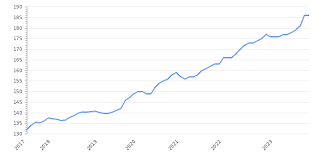
If you’ve been standing at the grocery store wondering why your cart feels lighter but your bill feels heavier — you’re not imagining things. The inflation rate in 2026 is currently sitting at 2.4%, a figure that sounds modest until you realize it’s been stuck there for months, refuses to fall below the Federal Reserve’s 2% target, and is now threatened by new shocks that could push it significantly higher.
Whether you’re a consumer, investor, business owner, or simply trying to stretch a paycheck, understanding the 2026 inflation rate is no longer optional. It directly affects your mortgage, your groceries, your credit card interest rate, and your retirement savings.
This article breaks down exactly where inflation stands today, what’s driving it, where it’s headed, and — most importantly — what you can do about it.
What Is the Current Inflation Rate in 2026?
As of February 2026, the U.S. Consumer Price Index (CPI) rose 2.4% year-over-year, unchanged from January. On a monthly basis, prices increased 0.3% — a slight acceleration from the 0.2% rise seen in January.
Here’s a snapshot of the key data points:
- Headline CPI (annual): 2.4%
- Core CPI (excluding food and energy, annual): 2.5%
- Food prices: Up 3.1% year-over-year
- Shelter/housing costs: Up 3% year-over-year
- Energy prices: Up 0.5% year-over-year
- Apparel: Up 1.3% in a single month — the biggest jump since 2018
- Uncooked ground beef: Up ~15% since February 2025
- Coffee prices: Up ~18% over the same period
The numbers tell a clear story: inflation is not crashing back to the Fed’s 2% target. As Mark Zandi, chief economist at Moody’s, put it, there’s no sense that inflation is decelerating — it feels persistently and uncomfortably high, especially for everyday necessities like food, housing, electricity, and medical care.
Why Is the U.S. Inflation Rate Still So High in 2026?
1. Tariffs Are Filtering Through to Consumers
One of the biggest drivers of the 2026 inflation rate is U.S. trade policy. Before recent court rulings modified the picture, the average effective tariff rate had climbed to 14.3% — the highest level since 1939. Even after adjustments, the tariff rate stands at around 10.5%, a level last seen in 1943.
These tariffs don’t hit consumers overnight. They work their way through supply chains over months. That lag means much of the tariff-driven price pressure is still arriving at store shelves. Apparel prices — highly sensitive to import costs — already jumped 1.3% in a single month, the largest spike in over seven years.
Economists estimate tariffs could add up to 1 full percentage point to year-over-year CPI inflation by the end of 2026 if current rates hold.
2. Geopolitical Shocks: The Iran Oil Disruption
The February 2026 CPI report captured data before the most recent geopolitical earthquake: the U.S.-Israel military engagement with Iran. In its aftermath, crude oil prices briefly surged above $100 per barrel, threatening to ripple through gasoline prices, shipping costs, and ultimately consumer goods across the economy.
Some economists now warn that if oil prices sustain near elevated levels, the CPI inflation rate could climb from the current 2.4% forecast to as high as 3.5% by year-end — a scenario that would significantly complicate the Federal Reserve’s plans.
3. Supply Shocks in Food Markets
Beyond tariffs and geopolitics, idiosyncratic supply shocks have hammered certain food categories. U.S. cattle supply is at its lowest in decades, driving beef prices sharply higher. Coffee prices have surged due to extreme weather events in major producing nations like Vietnam. These aren’t policy-driven problems — they’re structural, and they don’t resolve quickly.
4. Shelter Inflation Remains Stubborn
Housing costs, which carry a 35% weight in the CPI, have proven extremely resistant to falling. While rent increases have moderated in private markets (new leases rising around 2.9% annually per Zillow data), the government’s official measure of shelter costs tends to lag real-world trends by 12–18 months. Shelter inflation is only now slowly converging with market reality, with forecasts projecting a gradual decline to around 3% by December 2026.
Global Inflation Rate Outlook for 2026
The U.S. isn’t alone in wrestling with above-target inflation — but it is one of the more troubled major economies on this front.
According to J.P. Morgan Global Research, core CPI forecasts for 2026 break down as follows:
| Economy | Core CPI Forecast (2026) |
|---|---|
| United States | ~3.2% |
| United Kingdom | ~2.4% |
| Euro Area | ~1.9% |
| Global Average | ~2.8% |
While Western Europe is making genuine progress — declining goods prices and easing wage pressures are pushing euro area inflation toward 2% by mid-2026 — U.S. inflation is expected to remain stubbornly elevated above 3% as tariff pass-through effects and persistent service-sector price pressures keep costs high.
The Congressional Budget Office (CBO) also projects that inflation from 2026 to 2029 will run higher than previously estimated, primarily due to the effects of elevated tariffs.
What the Federal Reserve Is Doing About Inflation in 2026
The Federal Reserve is in a difficult spot. Its dual mandate — maximum employment and price stability — is being pulled in two directions simultaneously.
On one hand, inflation is still above the Fed’s 2% PCE (Personal Consumption Expenditures) target. On the other hand, economic growth is slowing in some areas, and political pressure to cut rates is intense.
The current consensus is:
- The Fed held rates unchanged at its March 2026 meeting
- Markets currently expect the next rate cut around September 2026
- Traders assign roughly a 43% chance of a second cut before year-end
- J.P. Morgan Asset Management expects the Fed to cut by 50 basis points total in 2026 and 75 basis points in 2027
The bottom line: don’t expect dramatic rate cuts any time soon. The Fed is watching the oil price situation carefully, as a sustained energy shock could force it to hold rates higher for even longer.
How the 2026 Inflation Rate Affects You Personally
Your Grocery Bill
Food inflation running at 3.1% annually means the average household is paying meaningfully more for the same basket of goods. Beef, coffee, and other protein-heavy staples are seeing some of the steepest price increases. Egg prices are a notable exception — down over 42% year-over-year after the avian flu-driven spike.
Your Housing Costs
Whether you rent or own, shelter costs are up 3% year-over-year. For renters, the good news is that new lease rates are rising more slowly than official CPI data suggests. For homeowners, elevated mortgage rates — a direct consequence of the Fed’s inflation-fighting posture — continue to suppress affordability.
Your Investments and Savings
- Savings accounts and money market funds are still offering relatively attractive yields compared to the pre-2022 era, though rates may drift lower as the Fed eventually cuts.
- Bonds: With inflation above target and rates likely staying higher for longer, long-duration bonds remain risky.
- Equities: Inflation complicates corporate margins, especially in consumer-facing sectors.
- Real assets (real estate, commodities): Historically perform better in inflationary environments, though current market-specific risks apply.
Your Debt
High inflation erodes the real value of fixed-rate debt — meaning if you locked in a fixed-rate mortgage or car loan, your real debt burden is being gradually reduced. However, variable-rate debt like credit cards and HELOCs remains expensive as long as the Fed holds rates elevated.
7 Practical Tips to Protect Your Finances from 2026 Inflation
With the inflation rate in 2026 stuck above target and facing upside risks, here are concrete steps you can take today:
- Build a buffer in I-Bonds or TIPS. Treasury Inflation-Protected Securities automatically adjust with CPI. They’re not glamorous, but they’re one of the most reliable inflation hedges available to retail investors.
- Lock in fixed-rate debt now. If you have variable-rate loans, explore refinancing options. A sustained rate environment is not guaranteed, but current rates may be near a peak.
- Audit your grocery spending. Brand loyalty is expensive in a tariff-heavy environment. Store-brand alternatives and bulk buying for non-perishables can make a real difference at current price levels.
- Review your investment allocation. If your portfolio is heavily weighted toward long-duration bonds or rate-sensitive growth stocks, consider rebalancing toward shorter-duration instruments or dividend-paying equities.
- Negotiate your salary or rates now. With inflation at 2.4–3%, any wage or fee that hasn’t increased in the past year represents a real pay cut. This is a reasonable and timely case to make to employers or clients.
- Track your personal inflation rate. The CPI is an average — your personal inflation rate depends on how you spend. Use a budgeting app to identify which categories are hitting you hardest and prioritize substitutions there.
- Don’t panic-buy or hoard. Tariff-driven anxiety often leads consumers to front-load purchases, which itself drives prices higher. Buy what you need; avoid panic.
What to Watch for in the Coming Months
The trajectory of the 2026 inflation rate will depend heavily on a handful of key factors:
- Oil prices and the Iran situation: A de-escalation could relieve significant pressure on energy and headline CPI. A widening conflict could push the CPI toward 3.5%.
- Tariff policy shifts: Any meaningful reduction in tariff rates would reduce inflationary pressure, particularly in goods categories. Watch for trade negotiations closely.
- Fed signals: The September FOMC meeting will be a critical milestone. A cut would signal that the Fed believes inflation is under control; holding would indicate ongoing concern.
- Labor market data: Continued job growth supports consumer spending and keeps services inflation elevated. Any meaningful cooling could create room for faster disinflation.
- Shelter CPI lag: As private rental market data continues to feed into official statistics, shelter inflation could gradually pull overall CPI lower in the second half of 2026.
The Bottom Line: Inflation in 2026 Is a Marathon, Not a Sprint
The inflation rate in 2026 is not in crisis territory — 2.4% is a far cry from the 8% peak of 2022. But it is persistent, stubbornly above target, and facing genuine upside risks from geopolitics, tariffs, and food supply disruptions.
The Federal Reserve is unlikely to ride to the rescue with aggressive rate cuts. The path back to 2% inflation is slow, and in the near term, the direction of travel may actually be upward before it comes down.
For consumers, investors, and businesses alike, the playbook is the same: stay informed, adapt your spending and saving habits, and don’t let short-term price spikes drive long-term financial decisions.
Ready to take control of your finances in an inflationary environment? Start by auditing your biggest monthly expenses, exploring inflation-protected savings instruments, and reviewing your investment allocation today. Small, deliberate moves made now compound significantly over time.