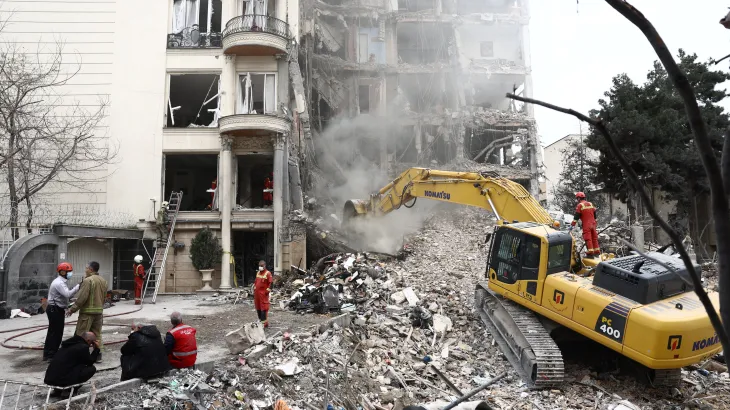
on February 28, 2026, the world changed. In the predawn hours, the United States and Israel launched coordinated airstrikes across Iran — killing Supreme Leader Ali Khamenei, targeting nuclear sites, missile factories, and military command centers. What had long been feared as a worst-case scenario for Middle East stability had become reality. The Iran war had begun.
Now in its fourth week, the conflict shows no clean path to resolution. Iran has retaliated with waves of ballistic missiles and drones against Israel, U.S. military bases across the region, and Gulf Arab neighbors who host American forces. The Strait of Hormuz — the narrow chokepoint through which roughly one-fifth of the world’s oil and liquefied natural gas normally flows — has been brought to a near-total halt, triggering what the International Energy Agency (IEA) has called “the largest supply disruption in the history of the global oil market.”
This article breaks down exactly how we got here, what is happening on the ground right now, the economic fallout rippling across the globe, and the scenarios analysts are watching closely in the weeks ahead.
Day 24Of Active Conflict
$110+Oil Price (per barrel)
~45%Oil Price Rise Since Feb 28
3,000+Vessels Stranded at Sea
The Road to War: How the Iran Conflict Began
The Iran war did not emerge from a vacuum. It is the product of years of escalating tensions, failed diplomacy, and a series of military exchanges that gradually lowered the threshold for all-out conflict.
The Twelve-Day War of June 2025
The immediate precursor to the 2026 Iran war was what became known as the “Twelve-Day War” in June 2025, when Israel — backed by U.S. airpower — struck Iranian nuclear and missile facilities for the first time in a sustained, overt military campaign. Iran’s air defenses and significant portions of its nuclear infrastructure were degraded, but the Islamic Republic survived politically. The strikes hardened Iranian resolve and accelerated the very nuclear program they were meant to destroy.
Protests, Massacres, and a Tipping Point
Beginning in late December 2025, massive nationwide protests erupted across all 31 of Iran’s provinces — the largest demonstrations since the 1979 Islamic Revolution, with an estimated five million Iranians taking to the streets. Sparked initially by the collapsing economy and runaway inflation, the protests rapidly escalated into explicit calls to overthrow the Islamic Republic itself.
The government’s response was catastrophic. Between January 8 and 10, 2026, security forces carried out massacres of protesters. Casualty estimates vary widely, but human rights organizations reported thousands of deaths. On January 2, President Trump threatened a “locked and loaded” military intervention if the Iranian government continued to kill peaceful protesters.
Failed Diplomacy and the February Strike Decision
In mid-February 2026, indirect U.S.–Iran nuclear negotiations mediated by Oman showed some early promise — the Omani foreign minister reported “significant progress” and Iran’s willingness to make concessions. But Trump said he was “not thrilled” with the talks, and they collapsed without agreement. Days later, at his State of the Union address on February 24, Trump accused Iran of having restarted its nuclear program and developing missiles capable of striking the U.S. The International Atomic Energy Agency (IAEA) followed with a report that Iran had concealed highly enriched uranium. The clock had run out on diplomacy.
Key Timeline: The Iran War in 2026
- Dec 28, 2025Mass anti-government protests erupt across all 31 Iranian provinces, driven by economic collapse.
- Jan 8–10, 2026Iranian security forces massacre protesters; casualty figures range from 3,000 to over 32,000.
- Jan 2, 2026Trump threatens military action against Iran over protest crackdowns.
- Feb 24, 2026Trump’s State of the Union accuses Iran of restarting nuclear program; IAEA confirms hidden enriched uranium.
- Feb 28, 2026U.S. and Israel launch surprise airstrikes on Iran. Supreme Leader Khamenei killed. War begins.
- Mar 1, 2026Iran launches retaliatory missile and drone strikes on Israel, U.S. bases, and Gulf Arab states.
- Mar 5, 2026Houthi leader warns his group is “ready to act” in support of Iran.
- Mar 19–20, 2026Israel strikes South Pars gas field; Trump urges Israel to stop hitting Iranian energy sites.
- Mar 21, 2026Trump signals U.S. may “wind down” military efforts; sanctions lifted on stranded Iranian oil.
- Mar 24, 2026Iran appoints new security chief; Iranian missiles strike Tel Aviv. Conflict enters week four.
What Is Happening Right Now on the Ground
As of today, March 24, 2026, the Iran war is in active and fluid combat. Here is the current state of play:
Strikes, Counter-Strikes, and the Nuclear Dimension
The U.S. and Israel have declared their war aims as destroying Iran’s nuclear and ballistic missile programs and inducing regime change in Tehran. Israeli Prime Minister Netanyahu has claimed that Iran now has “no ability to enrich uranium” and “no ability to produce ballistic missiles” — though independent verification remains impossible given restricted access inside Iran. Iran has named a new secretary of the Supreme National Security Council following the killing of several senior officials, demonstrating the regime’s resilience even as it absorbs enormous military blows.
Iranian ballistic missiles struck several areas of Tel Aviv overnight on March 24, causing significant building damage and at least four casualties. Iran’s Revolutionary Guard has called Trump a “deceitful American president” and vowed to continue fighting.
The Strait of Hormuz: A Global Choke Point
Perhaps the most consequential front of the Iran war is not a battlefield at all — it is the sea lane. Iran has declared it is ready to close the Strait of Hormuz indefinitely if the U.S. follows through on threats to bomb Iranian power plants. The strait carries roughly one-fifth of the world’s oil and liquefied natural gas under normal conditions. With traffic at a near-total halt, over 3,000 vessels are stranded in the Middle East, according to the International Maritime Organization — creating what one analyst described as a “massive parking lot” in the Persian Gulf.
Hezbollah Re-enters the Picture
Hezbollah in Lebanon has begun attacking Israel again in solidarity with Iran, prompting the Lebanese government — which had been working to disarm the group under prior UN Security Council resolutions — to formally ban Hezbollah’s military activities, and Israel to launch new military operations in Lebanon. The conflict is widening even as the Trump administration signals desire to wind it down.
“The war in the Middle East is creating a major energy crisis, including the largest supply disruption in the history of the global oil market.”— International Energy Agency (IEA), March 2026
The Global Economic Impact of the Iran War
No conflict in recent memory has hit global energy markets with the same speed and severity as the Iran war. The economic shockwaves are being felt from petrol stations in rural India to corporate boardrooms in Houston and Rotterdam.
Oil Prices Surge Past $110 Per Barrel
Since the Iran war began on February 28, crude oil prices have risen approximately 45%, surging past $110 per barrel and continuing to climb. For context, the world had been oversupplied with oil in February; the near-overnight disruption to Hormuz shipping reversed that surplus dramatically. The amount of oil stored at sea is falling rapidly as stranded vessels wait for safe passage.
- U.S. gasoline prices have risen sharply, creating domestic political pressure on the Trump administration.
- European energy markets face renewed pressure after years of adjusting to supply disruptions from the Russia–Ukraine war.
- Asian economies — particularly India, China, Japan, and South Korea — that depend heavily on Gulf oil imports are scrambling for alternatives.
- Airline industry faces surging jet fuel costs; the IEA is urging travelers to reduce air travel to ease demand.
Washington’s Emergency Measures
To blunt the energy crisis, the Trump administration took an unusual step on March 21: it temporarily lifted sanctions on Iranian oil and oil products currently loaded on ships at sea. The measure applies until April 19, 2026, and is intended to allow stranded tankers to deliver their cargo to market. The same administration has previously lifted some sanctions on Russian crude, giving a sense of how acute the energy pressure has become.
The IEA has urged governments, businesses, and households to take emergency conservation measures: reducing highway speeds by at least 6 miles per hour, promoting car-sharing, and encouraging remote work where possible.
Regional Alliances: Who Stands Where
The Iran war has rapidly reshuffled the Middle East’s diplomatic deck — and not always in the directions analysts expected.
Arab Gulf States: Caught in the Crossfire
Saudi Arabia and other Gulf Arab states normalized relations with Iran in 2023, brokered by China, and had been deepening ties carefully. Iran’s retaliatory strikes against Gulf nations hosting U.S. forces — including an attack on Kuwait’s Mina Al-Ahmadi oil refinery, the country’s largest — have placed these governments in an extraordinarily difficult position. Chatham House notes that Arab states no longer view Iran alone as the primary source of regional instability; Israel’s increasingly aggressive posture has complicated the calculus significantly.
The Houthis: Disciplined Restraint, For Now
Yemen’s Houthi movement has pledged solidarity with Iran, with leader Abdul-Malik al-Houthi stating his group’s “hands are on the trigger whenever developments require it.” Yet analysts note that Houthi declarations have been unusually measured compared to their typical rhetoric — likely shaped by the 2025 U.S.–Houthi ceasefire and the movement’s desire not to jeopardize ongoing peace talks with Saudi Arabia in the Yemeni civil war.
Western Allies: Support Without Participation
The UK, France, and Germany issued a joint statement on February 28 condemning Iran’s counter-strikes but not endorsing the original U.S.–Israeli attacks. UK Prime Minister Keir Starmer drew a careful distinction: he allowed U.S. use of British military bases Diego Garcia and RAF Fairford for “defensive purposes” — specifically to intercept Iranian missiles — but stated he “did not believe in regime change from the skies.” The UK published legal advice supporting its actions as self-defense.
How to Stay Informed: 5 Practical Tips for Following the Iran War
With information moving at extraordinary speed — and misinformation circulating equally fast — here is how to follow the Iran war responsibly and accurately:
- Follow verified primary sources. Al Jazeera, Reuters, the BBC, NPR, and the Associated Press are maintaining live blogs and fact-checked updates. Avoid sharing headlines from unverified social media accounts.
- Distinguish between claims and verified facts. Both sides of the Iran war are making maximalist claims. Netanyahu’s assertion that Iran has “no ability to enrich uranium” has not been independently confirmed. Treat battlefield claims from all parties with appropriate skepticism until corroborated.
- Track the energy markets as a conflict barometer. Oil prices — currently above $110/barrel — are a real-time proxy for how markets assess the probability of escalation versus de-escalation. A sharp drop would signal confidence in a ceasefire; a continued climb suggests widening conflict.
- Watch the Strait of Hormuz, not just the bombs. The most consequential variable in the Iran war for the global economy is whether shipping through Hormuz resumes. Follow updates from the International Maritime Organization and Lloyd’s of London.
- Seek regional context, not just Western framing. The Iran war looks very different from Tehran, Riyadh, Beirut, and Washington. Reading perspectives from Middle Eastern outlets, think tanks like Chatham House, and regional analysts will give you a fuller picture than Western wire services alone.
What Happens Next: Key Scenarios Analysts Are Watching
The Iran war remains deeply unpredictable. Here are the three most-discussed scenarios among geopolitical analysts as of late March 2026:
Scenario 1: U.S. “Wind-Down” and a Negotiated Pause
On March 21, Trump posted on Truth Social that the U.S. was “getting very close to meeting our objectives” and was “considering winding down” military efforts. If the U.S. defines success as destroying Iran’s nuclear program, crippling its missile capabilities, and killing its top leadership — and declares those objectives met — a de facto ceasefire could be brokered, possibly through Oman or Qatar. The temporary lifting of sanctions on stranded Iranian oil may be an early olive branch in this direction.
Scenario 2: Prolonged Attritional Conflict
Iran has demonstrated resilience: it has appointed new leadership, continued launching missiles into Israel and the Gulf, and threatened to permanently close Hormuz. If Tehran calculates that survival requires fighting rather than negotiating, the conflict could drag on for months with escalating economic consequences globally. The arrival of thousands of additional U.S. Marines aboard the USS Boxer — currently en route to the Persian Gulf — suggests Washington is not betting entirely on a quick wind-down either.
Scenario 3: Wider Regional Escalation
The most alarming scenario involves the conflict spreading beyond Iran’s borders in ways that are harder to control. Hezbollah’s re-entry into active conflict, Houthi threats to act, and Iranian strikes on Gulf Arab energy infrastructure all point toward a potential “multi-front war” that draws in Lebanon, Yemen, and Gulf states simultaneously. This scenario carries the most severe economic and humanitarian consequences and is the one the international community is working hardest to prevent.
The Human Cost: What We Know About Casualties and Civilian Impact
Reliable casualty figures from inside Iran are extremely difficult to obtain due to restricted internet and media access within the country. The House of Commons Library research briefing on the Iran war explicitly cautions that “civilian and military casualties and reports on specific events can be difficult to verify” for this reason.
What is known: Iranian counter-strikes have caused casualties in Israel, at U.S. military bases across the region, and in Gulf Arab states. Civilian infrastructure — including energy facilities — has been targeted by both sides. The pre-war massacres of Iranian protesters between January 8–10 alone resulted in thousands of deaths by the most conservative estimates.
Human rights organizations and UN bodies have called for humanitarian access to Iran and an immediate ceasefire. The war’s human cost, still being counted, is already severe — and rising.
Conclusion: A Conflict That Demands Global Attention
The Iran war of 2026 is not a distant regional skirmish. It is a conflict with direct consequences for global energy prices, international law, the future of nuclear non-proliferation, and the stability of the most energy-critical waterway on Earth. Four weeks in, it has already produced a global oil shock, killed a head of state, drawn in allied military forces from multiple continents, and pushed the Middle East into its most dangerous period in a generation.
Whether it ends in a negotiated wind-down, a prolonged stalemate, or a wider regional catastrophe depends on decisions that will be made in the coming days and weeks in Washington, Tel Aviv, and whatever remains of Tehran’s leadership structure. The stakes, for the entire world, could not be higher.
Staying informed — with credible sources, critical thinking, and an awareness of the massive economic and human dimensions of this conflict — is not just good citizenship. It is essential.