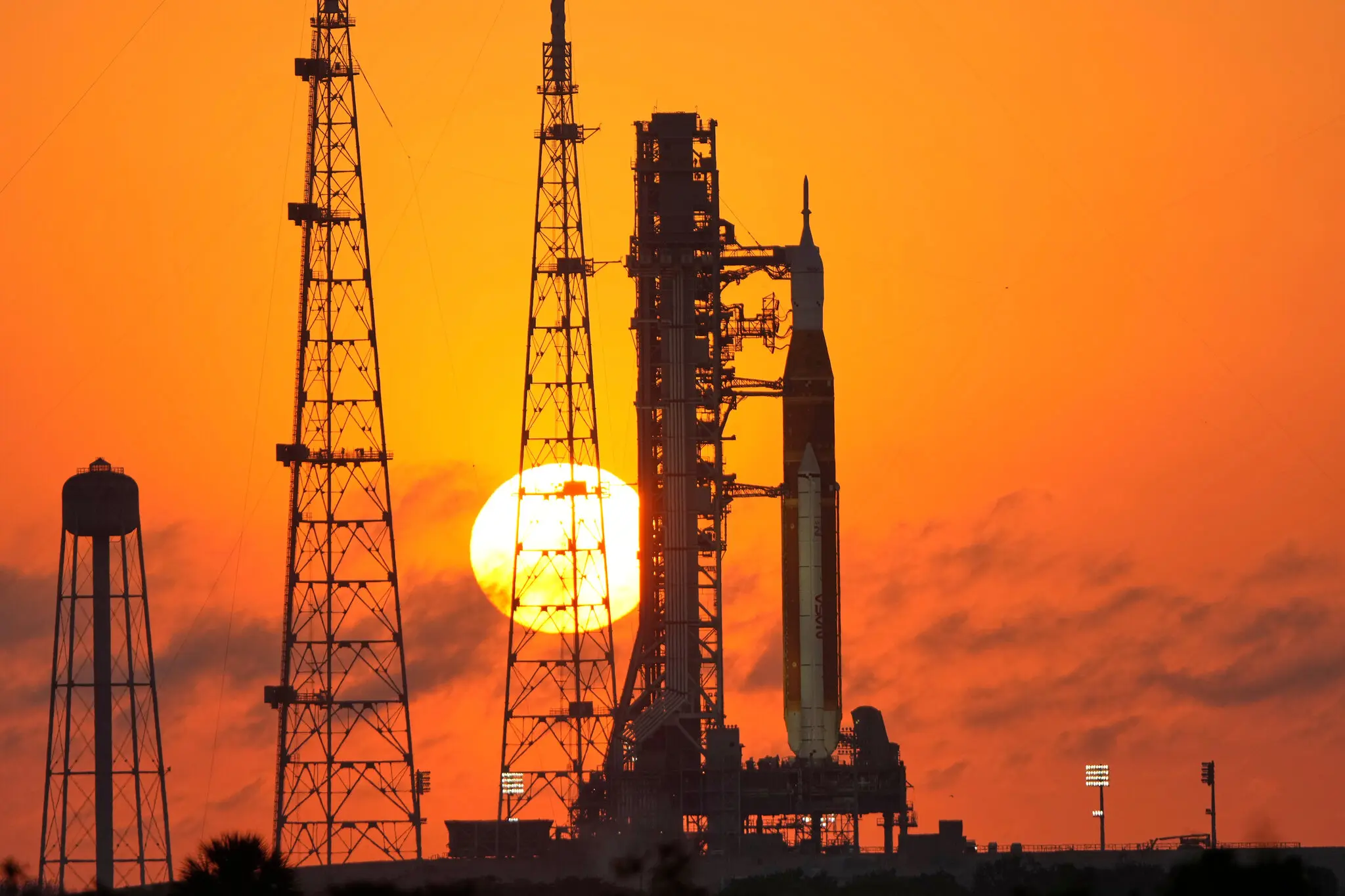
Introduction: America Is Going Back to the Moon — and This Time, to Stay
On March 24, 2026, NASA made one of the most significant announcements in its recent history. In a sweeping strategy overhaul unveiled at the agency’s Washington, D.C., headquarters, NASA confirmed it is committing $20 billion over the next seven years to build a permanent base on the moon’s surface — scrapping its earlier plans for an orbiting lunar space station entirely.
This isn’t another “flags and footprints” mission. NASA’s reimagined lunar plans include a $20 billion moon base designed for long-term human habitation, with habitats, pressurized rovers, nuclear power systems, and regular crewed missions every six months.
If that sounds ambitious, it is. But the urgency is real. China is aiming for its own moon landing around 2030 — and America is not willing to watch from the sidelines.
What Exactly Did NASA Announce?
At the agency’s “Ignition” event, NASA Administrator Jared Isaacman — sworn in December 2025 and appointed by President Trump — laid out a dramatic pivot in the Artemis program, NASA’s flagship lunar initiative.
Here are the headline changes:
- The Lunar Gateway is paused. The planned orbital space station, largely already built by contractors Northrop Grumman and Vantor (formerly Maxar), is being shelved in its current form.
- A surface base takes its place. Gateway’s hardware and components will be repurposed toward building a lunar surface base near the moon’s south pole.
- $20 billion over seven years will fund construction, robotic missions, and infrastructure development.
- Astronauts will land on the moon in 2028, with Artemis IV and Artemis V missions targeting the lunar surface.
- After Artemis V, NASA plans to land astronauts every six months, gradually expanding the base.
“NASA is committed to achieving the near-impossible once again,” Isaacman said. “This time, the goal is not flags and footprints. This time, the goal is to stay.”
Why NASA Is Canceling the Lunar Gateway
The Lunar Gateway was designed to serve as a research platform and transfer station in lunar orbit — essentially a waypoint between Earth and the moon’s surface. Astronauts were supposed to dock at Gateway before boarding landers to descend to the surface.
So why scrap it?
The answer comes down to strategic focus and competitive pressure.
Building an orbital station first was seen as adding time and cost to what should be the real end goal: sustained human presence on the moon. By pivoting directly to a surface base, NASA is betting it can get boots on the ground — and keep them there — faster.
“It should not really surprise anyone that we are pausing Gateway in its current form and focusing on infrastructure that supports sustained operations on the lunar surface,” Isaacman told delegates at the event.
Repurposing Gateway hardware won’t be simple. The orbital station was designed for microgravity, not surface operations. But NASA insists the components can be adapted, saying: “Despite some of the very real hardware and schedule challenges, we can repurpose equipment and international partner commitments to support surface and other program objectives.”
The Three-Phase Plan for NASA’s Moon Base
NASA’s $20 billion moon base strategy is broken into three structured phases:
Phase 1: Build, Test, Learn
NASA and commercial partners will send rovers, instruments, and technology to the lunar surface. The goal here is exploratory — testing mobility systems, power solutions, communications infrastructure, navigation tools, and scientific equipment. Robotic missions lead the charge, preparing the site before humans arrive.
Phase 2: Early Infrastructure
This phase transitions from testing to building. NASA and its partners will construct semi-habitable areas for astronauts, in collaboration with international partners including the Japan Aerospace Exploration Agency (JAXA). Astronauts will begin operating on the surface consistently during this phase.
Phase 3: Long-Term Presence
The final phase delivers larger habitats and vehicles, with contributions from the Italian Space Agency (ASI) and the Canadian Space Agency (CSA). This is where short-term missions evolve into a permanent human presence — a true outpost on the moon.
The base is planned for the lunar south pole, a region of significant scientific interest due to confirmed water ice deposits that could be converted into rocket fuel and drinking water.
Nuclear Power on the Moon — and Mars
One of the more remarkable elements of the announcement involves nuclear energy in space.
NASA disclosed plans to launch a spacecraft called Space Reactor 1 Freedom before the end of 2028. The mission is designed to demonstrate nuclear electric propulsion in deep space, as part of NASA’s broader Moon-to-Mars strategy. The spacecraft will also deliver helicopters to Mars — similar to the Ingenuity rotorcraft that flew on NASA’s Perseverance mission — to test operational nuclear propulsion in a real-world environment.
Nuclear power is also central to the moon base itself. Operating on the lunar surface requires energy around the clock, including during the two-week-long lunar night when solar panels are useless. Nuclear fission reactors offer the stable, high-output power needed to sustain habitats, rovers, and scientific equipment in that environment.
This dual focus — nuclear lunar power and nuclear Mars propulsion — signals that NASA’s reimagined strategy treats the moon not just as a destination, but as a proving ground for deeper space exploration.
The China Factor: Why the Timeline Matters
Behind every element of this announcement is a quiet but urgent geopolitical reality: China is coming.
China has publicly stated its goal of landing astronauts on the moon by 2030. That timeline is close enough to create genuine competitive tension — and it’s influencing every decision NASA is making right now.
“They might be early, and recent history says we might be late,” Isaacman acknowledged. “But this time, the goal is not flags and footprints. This time, the goal is to stay.”
The U.S. has already spent an estimated $107 billion on return-to-the-moon programs since 2003, according to the Planetary Society — a figure that accounts for inflation and spans multiple administrations, each of which changed course. The Constellation program under President George W. Bush targeted a 2020 return. The Obama administration redirected funding to asteroid missions. Trump’s first term launched the Artemis program with a 2024 landing goal that didn’t materialize.
This time, the urgency feels different. With Artemis II — a crewed lunar flyby — launching just eight days after the announcement, and crewed surface landings slated for 2028, the program has the most concrete near-term milestones it has ever had.
What Happens to International Partners?
The Gateway pivot creates some uncertainty for international partners who had already committed resources to the orbital station.
Japan, Canada, and the European Space Agency had all signed on to provide components for the Gateway station. With those plans now paused, their roles in the Artemis program are in flux. NASA has said it intends to find ways to incorporate their commitments into the surface base program, but details remain to be worked out.
This matters beyond diplomacy. International partners bring hardware, funding, scientific expertise, and political legitimacy to the program. Keeping them engaged — and reassured — will be a key challenge as NASA reshapes its contracts and priorities.
Commercial Partners: SpaceX and Blue Origin in the Mix
NASA isn’t building this moon base alone. Commercial space companies are central to the plan.
SpaceX (led by Elon Musk) and Blue Origin (led by Jeff Bezos) are both developing moon landers for NASA, each targeting an initial crewed surface landing in 2028. Both have fallen behind schedule, and NASA officials made limited mention of specific acceleration plans during the Ignition event.
The broader commercial involvement goes beyond landers. Regular cargo missions, surface logistics, habitat construction, and rover operations are all areas where private companies are expected to play major roles. NASA’s approach here mirrors the successful model it used for the International Space Station, where commercial cargo and crew contracts transformed low Earth orbit operations.
What This Means for Space Exploration — and You
NASA’s reimagined lunar plans represent the most substantive shift in American space policy in a generation. Here’s why it matters beyond the headlines:
- Water ice on the moon could be extracted and turned into hydrogen fuel and oxygen — potentially making the moon a refueling depot for deep space missions.
- Medical and materials research conducted in the moon’s low gravity environment could yield breakthroughs impossible on Earth.
- Technology developed for lunar habitation — life support, radiation shielding, closed-loop resource systems — will be essential for any future Mars mission.
- Economic opportunity is significant. The $20 billion investment will flow through contracts to aerospace companies, universities, and technology firms across the United States.
- Inspiration at scale. A generation of engineers, scientists, and explorers will be shaped by watching humans build a permanent settlement on another world.
Practical Tips: How to Follow NASA’s Moon Base Progress
If you want to stay current on NASA’s lunar plans, here are five reliable ways to track developments:
- Bookmark NASA.gov — The official source for mission updates, launch schedules, and program announcements.
- Follow NASA’s social channels — @NASA on X, Instagram, and YouTube post real-time updates during launches and announcements.
- Subscribe to Spaceflight Now — One of the most detailed outlets covering NASA missions with technical precision.
- Track the Artemis launch manifest — Artemis II launches in early April 2026; Artemis III follows as the first standardized SLS mission. Each step builds toward the 2028 surface landing.
- Watch for contract announcements — NASA’s procurement database (SAM.gov) lists new contracts that signal where the moon base money is actually flowing.
Conclusion: The Moon Is No Longer Just a Destination
NASA’s reimagined lunar plans — anchored by a $20 billion moon base commitment — mark a fundamental change in how America thinks about space exploration. The orbital Gateway was a waypoint. A surface base is a home.
The questions that remain are significant: Can NASA and its partners hit the 2028 landing deadline? Will Congress maintain funding across a seven-year build? Can international partners be kept engaged through the pivot?
But the direction is clear. After decades of changing course, NASA is planting its flag — not on the lunar surface as a photo opportunity, but in the ground of a long-term commitment.
The moon is no longer just a destination. It’s the next frontier.
Want to stay updated on NASA’s moon base progress? Bookmark your favorite space news source and watch Artemis II launch in just days — the first crewed lunar mission in over 50 years is almost here.