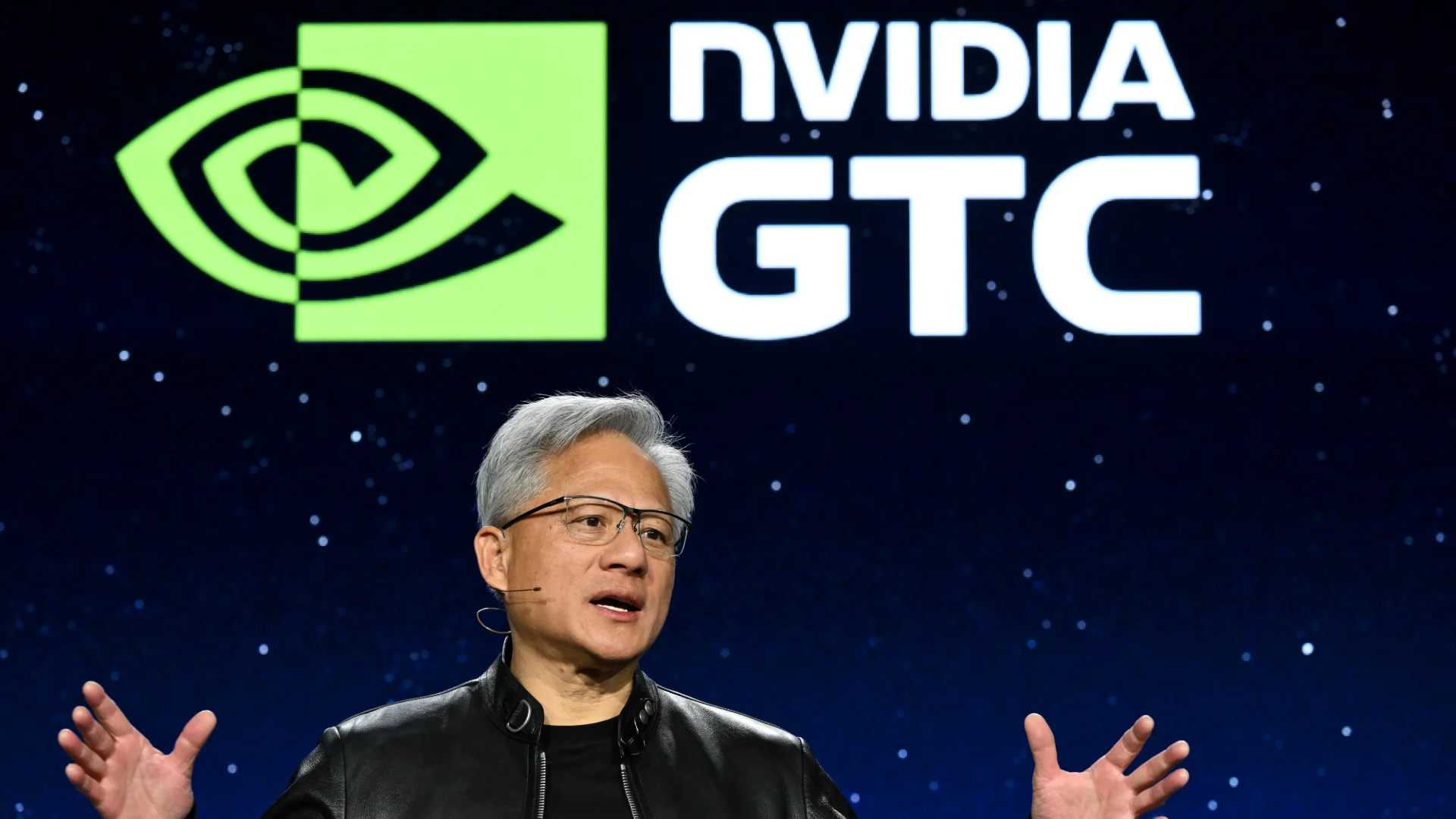
Artificial General Intelligence (AGI) has long been treated as a distant, almost sci‑fi milestone. Then, in 2026, NVIDIA CEO Jensen Huang made a bold statement that sent shockwaves through the tech world: “I think we’ve achieved AGI.”
That short phrase has triggered debates, hype, and confusion among developers, investors, and business leaders. In this SEO‑friendly deep‑dive, we’ll unpack what Huang actually meant, how close we really are to AGI, and what this means for your work, your business, and your future.
What AGI Means Today
Before we dive into NVIDIA’s CEO, it helps to clarify what “AGI” really means in 2026.
Artificial General Intelligence traditionally refers to a system that can:
- Understand, learn, and apply knowledge across many domains.
- Perform tasks at or beyond human level, not just follow rigid rules.
In practice, the term has always been fuzzy, and Huang has previously defined AGI as software that can pass tests approximating normal human intelligence at a competitive level. He once suggested that milestone would arrive within about five years—an estimate that now looks prescient.
NVIDIA CEO Jensen Huang’s AGI Statement
During an appearance on the Lex Fridman Podcast, Huang was asked whether AI could one day invent, attract customers, and run a billion‑dollar company. His answer was startlingly direct: “I think we’ve achieved AGI,” and he added that AI can now autonomously start and manage complex, high‑value enterprises.
That doesn’t mean every chatbot is suddenly a genius. Huang later clarified that while AI agents can launch and operate businesses, the odds of 100,000 of them “building NVIDIA” from scratch are effectively zero. In other words, narrow, situational AGI exists more than full‑scale, human‑like AGI.
How NVIDIA’s Tech Powers the AGI Leap
To understand why Huang is talking about AGI now, look at the stack behind NVIDIA’s boom.
1. GPU Architecture and AI Workloads
NVIDIA’s GPUs—especially the H100 and Blackwell series—have become the backbone of large‑model training and inference. These chips are optimized for parallel computation, which is exactly what deep‑learning models need. Without this hardware foundation, running models capable of broad‑task reasoning at scale would be impossible.
2. CUDA and the AI Software Ecosystem
Beyond the hardware, NVIDIA’s CUDA platform and libraries (like cuDNN, TensorRT, and Triton) let developers build and deploy AI agents that can chain tasks, call tools, and reason across multiple steps. This is where AGI‑style behavior starts to emerge: AI agents that can plan, execute, and iterate instead of just answering one‑shot prompts.
3. Agent Platforms and Autonomous Workflows
Huang has highlighted the rise of AI agent platforms such as OpenClaw and similar infrastructures that coordinate thousands of autonomous agents. These platforms support:
- Task orchestration across multiple models.
- Continuous learning and adaptation.
- Autonomous business‑like operations (e.g., sales, product management, support).
That’s the core of what Huang points to when he says AGI has arrived: not a single human‑like mind, but systems that can perform complex, multi‑domain work end‑to‑end.
What “AGI Has Arrived” Really Means for Business
For most readers, the big question isn’t academic—it’s: What does this mean for my company, my job, and my strategy?
1. AI‑Run Companies Are No Longer Theoretical
Huang’s claim that AI can launch and manage billion‑dollar enterprises isn’t just speculation. Right now, AI agents are already:
- Building and running small online businesses.
- Managing customer acquisition and churn.
- Optimizing pricing, inventory, and marketing in real time.
In many cases, these operations are still overseen by humans, but the core execution is increasingly automated.
2. The “Human‑In‑The‑Loop” Is Still Essential
Despite the AGI‑like behavior, Huang stresses that human oversight matters. He points out that many AI‑driven projects “die away” after a few months, and that truly replicating something like NVIDIA would require far more than raw AI agents—it needs culture, strategy, and leadership.
3. New Roles: AI Orchestrators, Prompt Architects, and Agents Managers
As AI takes on more tasks, demand is shifting toward professionals who can:
- Design AI workflows and agent chains.
- Train and finetune agents for specific domains.
- Monitor and refine autonomous systems.
These roles are essentially the human “conductors” of AGI‑powered systems.
SEO‑Friendly Deep Dive: How NVIDIA CEO’s AGI Vision Affects Industries
To make this article truly useful for SEO and real‑world readers, let’s break down Huang’s AGI‑related vision by industry.
1. Tech and Software
- Code‑generation models and autonomous agents are already writing, testing, and deploying software.
- Future AI agents may:
Practical takeaway: Start treating AI agents as full‑time team members and invest in prompt‑engineering and agent‑orchestration skills.
2. E‑commerce and Marketing
- AI agents can manage:
- Ad campaigns.
- Product descriptions.
- Customer‑service bots.
- They can even test pricing, run promotions, and analyze competitors autonomously.
Practical takeaway: Map your current marketing and sales workflows and identify tasks that can be fully automated or semi‑automated with AI agents.
3. Finance and Investment
- Some AI agents already analyze market data, simulate trading strategies, and generate portfolio recommendations.
- Regulatory and risk‑management constraints mean humans still make final calls, but AI handles much of the legwork.
Practical takeaway: Use AI agents to gather and synthesize data, but keep humans in charge of risk‑sensitive decisions.
4. Healthcare and Research
- AI agents help:
While full AGI‑level diagnosis is still risky, AI can significantly speed up research and experimentation.
How to Prepare for an AGI‑Driven Future (Actionable Tips)
Don’t wait for the “AGI revolution” to hit you from the outside. Here are practical steps you can take today, inspired by NVIDIA’s CEO’s vision.
1. Audit Your Workflow for AI‑Susceptible Tasks
- List all repetitive or rule‑based tasks in your role or business.
- Rank them by:
- Volume.
- Complexity.
- Impact on revenue or customer experience.
- Start automating the high‑volume, low‑complexity tasks first.
2. Learn AI Agent Orchestration, Not Just Chatbots
- Study tools like LangChain, Auto‑GPT, and similar frameworks that let you chain multiple models and tools.
- Experiment with:
3. Upskill Your Team in AI Literacy
- Train non‑technical staff to:
- Encourage collaboration between engineers, data scientists, and domain experts to design AI workflows together.
4. Build an AI Governance Framework
- Define clear policies for:
- When AI can make decisions autonomously.
- When it must escalate to humans.
- Implement logging, monitoring, and audit trails for AI‑driven decisions.
Clarifying the Limits: Is AGI Really Here?
Huang’s claim is provocative but not universally accepted. Several experts argue that:
- Current systems still lack true self‑awareness, common sense, and long‑term memory.
- Many “AGI‑like” demos are narrow applications, not general intelligence.
Huang himself acknowledges the nuance: while he believes AGI has arrived in a practical sense, he also recognizes that scaling this to something as complex as NVIDIA is extremely unlikely in the near term.
So think of it this way: we’re not in the full‑blown sci‑fi AGI era, but we are in an era where AI can act like AGI in many real‑world scenarios.
Why NVIDIA CEO’s AGI Vision Matters for SEO and Content
If you’re writing SEO content in 2026, Huang’s AGI comments are a signal:
- Search engines are increasingly rewarding EEAT (Experience, Expertise, Authoritativeness, Trustworthiness).
- Google’s systems are themselves powered by AI that can judge depth, usefulness, and topical relevance.
That means:
- Thin, fluff‑filled content will lose to well‑structured, fact‑backed articles.
- Articles that explain complex topics like “NVIDIA CEO AGI” clearly and practically will rank better over time.
Quick SEO Tips for Articles Like This One
- Use keyword variations naturally: “NVIDIA CEO on AGI,” “Jensen Huang AGI statement,” “is AGI really here.”
- Keep paragraphs short and scannable.
- Use subheadings with semantic keywords (H2, H3) and bullet points where useful.