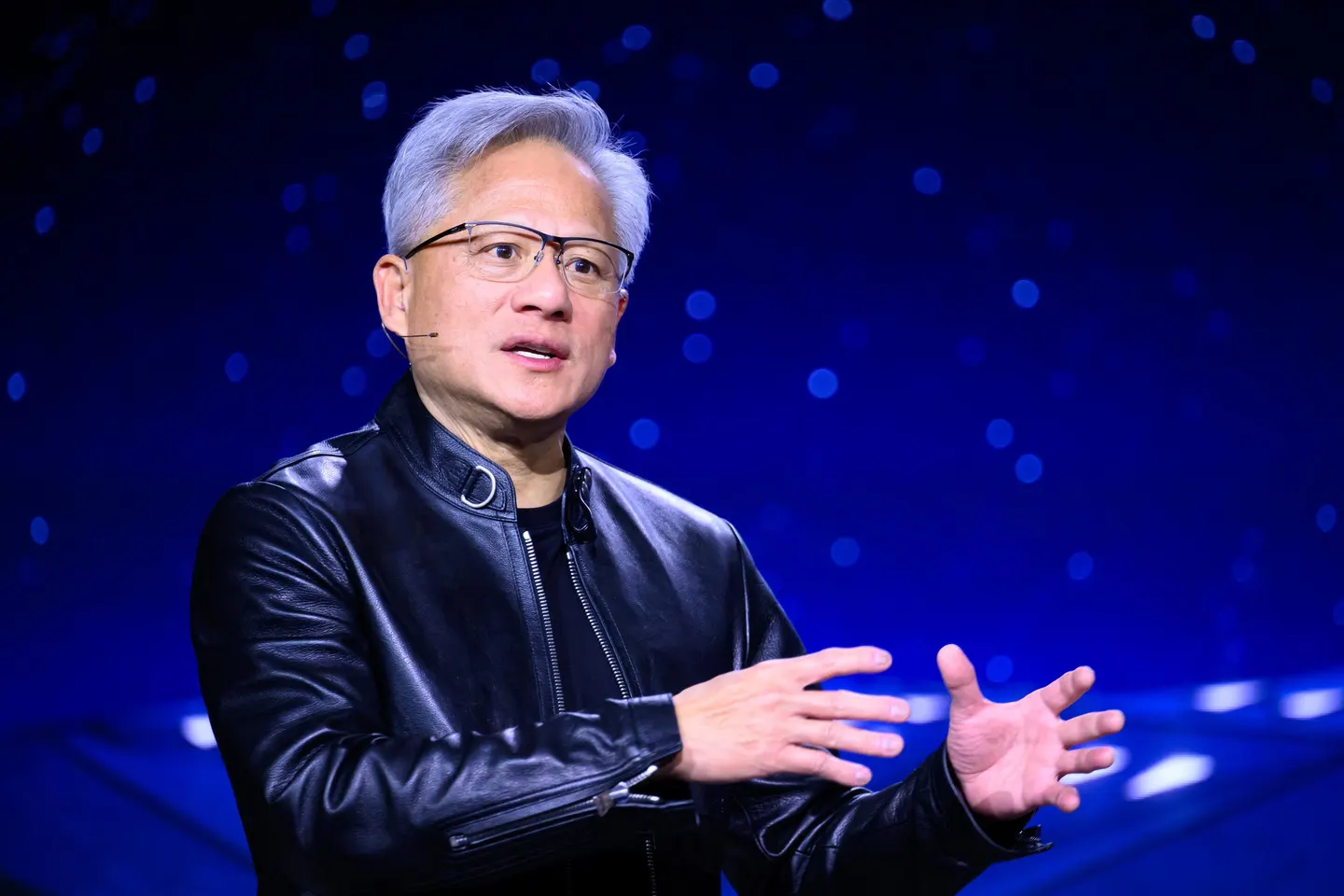
The Nvidia CEO dropped four words on the Lex Fridman podcast that sent the AI world into a frenzy. But his full statement is far more nuanced — and more important — than the headline.
Four words. That’s all it took to rewrite the AI conversation for the week. On March 22, 2026, during an appearance on the Lex Fridman Podcast, Nvidia CEO Jensen Huang looked into the camera and said plainly: “I think it’s now. I think we’ve achieved AGI.”
The clip spread across social media within hours. Analysts scrambled. Nvidia stock ticked up 1.5% the following session. Researchers pushed back. And the rest of us were left asking the same obvious question: what does “achieved AGI” actually mean?
The answer, it turns out, is both more grounded and more consequential than the meme-ready soundbite suggests. This article breaks down exactly what Huang said, what he excluded, who’s pushing back, and what it means for you — whether you’re an investor, a developer, or just someone trying to understand where AI is headed.
I think it’s now. I think we’ve achieved AGI.— Jensen Huang, Lex Fridman Podcast, March 22, 2026
What Jensen Huang Actually Said — In Context
Context is everything here, and most of the discourse around Huang’s statement has stripped it out entirely. Here’s what actually happened on the podcast.
Lex Fridman posed a specific benchmark: what would it take for an AI system to “start, grow, and run a successful technology company” valued at over a billion dollars? He then asked Huang when that milestone might arrive. Huang’s answer was immediate: “I think it’s now.”
But Huang didn’t stop there — and this is the part that gets lost. He immediately hedged: Fridman’s definition was about running a company worth $1 billion, but not necessarily for a sustained period. In Huang’s framing, it isn’t out of the question that a Claude-like model could build a successful web service that generates a billion in revenue briefly before fading away. That’s a very different thing from running Nvidia for 30 years.
Key Quotes From the Podcast — Verbatim
- “I think it’s now. I think we’ve achieved AGI.” — Jensen Huang, on timeline for AGI
- “A lot of people use it for a couple of months and it kind of dies away.” — Huang on AI agent sustainability
- “The odds of 100,000 of those agents building Nvidia is zero per cent.” — Huang, same interview
- “Possible.” — Huang, when asked if a company could be operated entirely by AGI
So in a single interview, Huang both declared AGI achieved and said the odds of AI replicating Nvidia are zero. The contradiction is intentional — it reflects a very specific, task-bounded definition of AGI that most researchers would reject.
What Is AGI — And Why Nobody Agrees
Before you can evaluate Huang’s claim, you need to understand why AGI is such a contested term. Artificial General Intelligence is broadly defined as an AI system capable of performing any intellectual task that a human can. That’s the textbook version. But in practice, no standard definition exists that the industry has officially adopted.
The Definitions in Play Right Now
Different leaders mean wildly different things when they invoke the term:
- Huang’s Definition (Task-Completion AGI)AGI = a system that can complete commercially valuable tasks at a high level, including building a short-lived but successful product or business. Emphasis on output value, not sustained intelligence.
- Sam Altman’s Definition (Near-AGI)OpenAI’s CEO recently said, “We basically have built AGI, or very close to it,” but walked it back as a “spiritual” statement, adding that many medium-sized breakthroughs are still needed. OpenAI and Microsoft also have contract clauses tied to AGI being “officially” achieved.
- Satya Nadella’s Definition (Not Even Close)Microsoft’s CEO gave the starkest counterpoint, telling Forbes flatly that the industry is “not anywhere close to AGI.”
- Academic Definition (Full Cognitive Parity)Researchers generally require AGI to demonstrate human-level performance across all cognitive domains — not just coding and reasoning, but novel physical navigation, long-horizon planning, emotional intelligence, and genuine understanding built through lived experience.
The gap between these definitions isn’t a technicality — it has real financial and legal weight. Performance benchmarks and risk clauses in high-stakes contracts between companies like OpenAI and Microsoft are literally tied to whether AGI is considered to have been achieved. The word carries contractual gravity.
The Case For and Against Huang’s Claim
Is Huang right? The honest answer depends entirely on what standard you hold. Here’s a balanced breakdown of the strongest arguments on both sides.
Arguments Supporting the Claim
- AI systems now pass bar exams and write production-grade code
- AI agents can autonomously launch and monetize small digital products
- OpenClaw and similar platforms enable autonomous multi-step task execution
- Systems can process information at superhuman speed across many domains
- The commercial value delivered by AI already exceeds narrow task definitions
Arguments Against the Claim
- Current AI still hallucinate facts and fail at novel reasoning
- AI cannot navigate unfamiliar physical environments reliably
- No AI sustains complex strategy across months the way humans do
- Long-term business management and organizational leadership remain beyond reach
- Huang himself said AI agents building a company like Nvidia has “zero percent” odds
The critics are not wrong. Academic researchers point out that genuine AGI should handle novel physical situations, sustain long-horizon thinking, and build real understanding through experience — not pattern-matching over vast training datasets. Today’s frontier models still hallucinate, still fail on novel reasoning tasks, and still lack the kind of flexible, embodied intelligence that most AGI definitions require.
But Huang isn’t claiming those things. He’s making a narrower, commercial argument: that AI can now generate enough value in a bounded context to meet a practical definition of general capability. That’s a defensible position — even if it frustrates researchers who have spent careers defining the term differently.
Why Huang’s Statement Matters — Even If You Disagree
Whether or not you accept Huang’s definition, his statement changes things. Here’s why.
1. It Shifts the Narrative From “When” to “Now What”
For years, the dominant question in AI was: when will AGI arrive? By declaring it’s already here — even with caveats — Huang moves the conversation toward governance, safety, and deployment. That’s a significant rhetorical shift that will shape how investors, regulators, and competitors frame the next phase of AI development.
2. Nvidia Controls the Infrastructure
Huang isn’t a neutral observer. Nvidia is the company whose H100 and Blackwell chips power virtually every frontier AI system in existence. At GTC earlier in March 2026, Huang projected at least $1 trillion in chip sales from Blackwell and Vera Rubin platforms through 2027 — roughly $500 billion in new order visibility since October 2025. When the CEO of the AI infrastructure layer says AGI is achieved, it tells a story that’s very good for Nvidia’s order book.
3. It Has Real Contract Implications
The OpenAI-Microsoft partnership has performance clauses tied to AGI milestones. Huang’s public declaration — even informal — adds pressure to those agreements and could accelerate how those companies interpret and act on their own internal definitions. Words from a figure of Huang’s stature have downstream legal and commercial weight.
4. It Accelerates the AI Safety Debate
If even one of the most powerful CEOs in tech believes AGI-level capability is already here, regulators and safety researchers cannot afford to stay in “future-proofing” mode. The urgency calculus changes immediately. The debate shifts from preparing for AGI to managing what already exists.
What This Means For You — Practical Takeaways
Regardless of where you land on the AGI debate, Huang’s statement signals a moment worth paying attention to. Here’s how to use it.
5 Practical Steps to Navigate the AGI Moment
- Stop waiting for AGI to become useful.If Huang’s commercial definition holds any water, then AI is already capable of generating real business value. If you’re not using AI tools actively in your work, you’re already behind — not because AGI is here, but because modern AI capability is genuinely transformative right now.
- Learn to evaluate AI claims critically.Every major AI figure now has a financial incentive tied to how “advanced” AI appears to be. That doesn’t make their claims wrong — it means you need to dig into definitions, caveats, and context rather than accepting headlines at face value.
- Watch the OpenAI-Microsoft AGI clause.If that contract’s AGI benchmark is triggered, it will be one of the most consequential business events in AI history. Understanding what that clause requires will tell you far more about real AGI progress than any podcast soundbite.
- Stay informed on AI regulation.Statements like Huang’s accelerate regulatory attention. Whether you’re a developer, business owner, or investor, understanding how governments are interpreting AI milestones will directly affect your decisions in the coming 12–24 months.
- Test AI agents for your own use cases now.Huang specifically cited platforms like OpenClaw as evidence of AGI-adjacent capability. The best way to understand what today’s AI can and cannot do isn’t to follow the debate — it’s to run your own experiments and build your own mental model of the capability floor.
The Bigger Picture: Where Do We Actually Stand?
Here’s a grounded summary. AI in 2026 is extraordinary. It can write code, pass professional exams, generate content at scale, power autonomous agents, and handle complex multi-step reasoning tasks that would have seemed impossible five years ago. Huang is right that current systems have crossed a threshold of practical utility that no reasonable observer could dismiss.
But “practically transformative” and “generally intelligent” are not the same thing. Today’s AI systems still hallucinate, still fail at physical reasoning, still lack genuine understanding, and still cannot sustain the kind of long-horizon, adaptive thinking that separates a smart tool from an intelligent agent. Huang’s own admission — that the odds of AI replicating Nvidia are zero — is actually the most honest part of his statement.
The truth is that AGI, in any meaningful sense, remains undefined enough to be claimed without proof and denied without disproof. What Huang has really done is remind us that the question isn’t academic anymore. The capabilities are real. The stakes are enormous. And the definitions we use will determine everything from billion-dollar contracts to government policy to how we think about work, creativity, and human value in an AI-saturated world.
That conversation is worth having seriously — with or without the headline.
Conclusion: Four Words That Changed the Conversation
Jensen Huang’s declaration that “we’ve achieved AGI” is simultaneously bold, commercially motivated, technically qualified, and genuinely important. It is not a scientific finding — it’s a framing choice by one of the most influential figures in AI, made in a context where framing has enormous consequences.
What matters most isn’t whether you agree with his definition. What matters is that the world’s most powerful AI hardware company has publicly moved past the question of “if” and is now operating in the world of “now what.” The rest of us would be wise to do the same.
AI is already capable enough to transform industries, reshape jobs, and create entirely new business models. Whether you call that AGI or not is a semantic debate. What you do with the capability in front of you — that’s the only question that matters.