Introduction: The Fed Hits Pause — And Every American Should Pay Attention
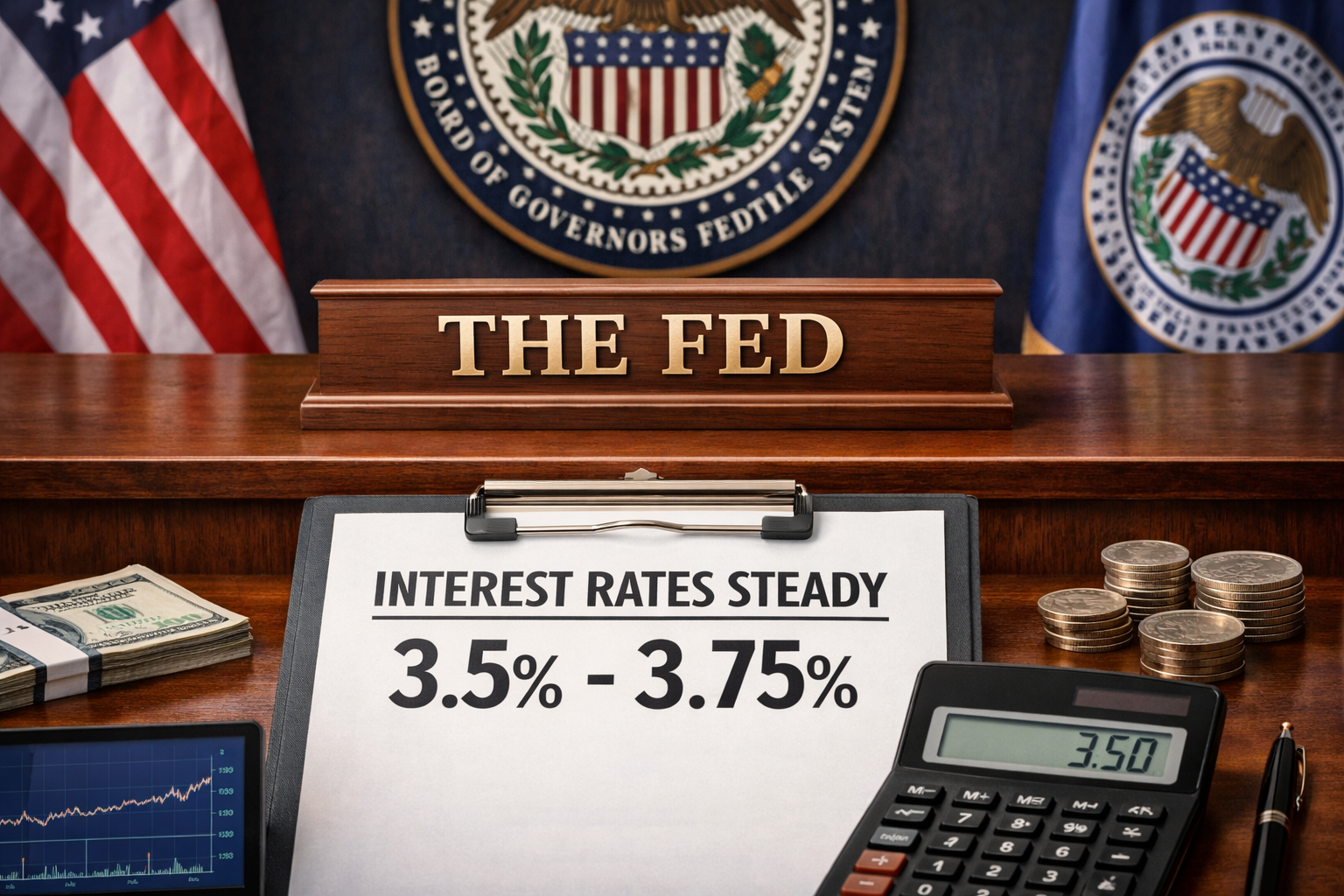
In one of the most closely watched economic decisions of the year, the Federal Reserve kept interest rates steady at 3.5%–3.75%. No hike. No cut. Just a deliberate, calculated hold.
For most people, a Fed announcement feels like background noise — something that happens in Washington and somehow ripples into daily life without any clear explanation. But this decision is different. Whether you carry a mortgage, have savings sitting in a bank account, run a business, or invest in the stock market, the Fed’s decision to hold rates at 3.5%–3.75% directly shapes the financial environment you live in.
This article breaks it all down — why the Fed paused, what it means across different areas of your financial life, and exactly what you should do about it.
What Does “The Fed Kept Interest Rates Steady” Actually Mean?
The Federal Reserve controls the federal funds rate — the interest rate at which banks lend money to each other overnight. This rate acts as the foundation for almost every other interest rate in the economy.
When the Fed raises rates, borrowing becomes more expensive, which typically slows down spending and inflation. When it cuts rates, borrowing gets cheaper, which stimulates economic activity. When it holds rates steady at 3.5%–3.75%, the Fed is essentially pressing pause — watching the data before making another move.
This “wait and see” approach signals that the Fed believes:
- Inflation is cooling but hasn’t fully reached the 2% target
- The labor market remains resilient
- More data is needed before committing to either a rate cut or another hike
It’s a balancing act between fighting inflation and avoiding a recession — and right now, the Fed is threading that needle carefully.
Why Did the Fed Keep Rates Unchanged at 3.5%–3.75%?
Inflation Is Falling — But Not Fast Enough
Inflation has come down significantly from its peak levels. However, certain categories — particularly shelter costs and services — remain persistently elevated. The Fed wants to be sure inflation is sustainably on its way to 2% before declaring victory and cutting rates.
Cutting too early risks reigniting inflation. Holding steady gives the current rate environment more time to do its work.
The Economy Is Holding Up Better Than Expected
A strong labor market, steady consumer spending, and GDP growth above forecasts have given the Fed room to pause without triggering alarm. If the economy were in freefall, the pressure to cut would be enormous. Instead, the resilience of the economy gives policymakers the luxury of patience.
Global Uncertainty Adds Caution
Geopolitical tensions, energy market volatility, and global supply chain pressures add layers of uncertainty. The Fed doesn’t want to make aggressive moves while too many variables remain in play.
How the Fed’s Steady Rate at 3.5%–3.75% Impacts You Directly
1. Mortgages and Home Buying
This is where most Americans feel rate decisions most viscerally. The Fed’s rate doesn’t set mortgage rates directly, but it influences them heavily through its effect on 10-year Treasury yields and lending conditions.
With rates held steady:
- Fixed mortgage rates are unlikely to drop significantly in the near term
- Adjustable-rate mortgages (ARMs) remain elevated
- Home affordability stays constrained for first-time buyers
- Refinancing still doesn’t pencil out for most homeowners who locked in rates below 3% during 2020–2021
If you’re planning to buy a home, don’t wait for rates to dramatically fall. They may ease later in the year, but a “hold” doesn’t mean a cut is imminent.
2. Credit Cards and Personal Loans
Credit card interest rates are closely tied to the federal funds rate. With rates at 3.5%–3.75%, average credit card APRs remain near historic highs — often above 20%.
If you’re carrying a balance, every month you wait costs you real money. This environment rewards aggressive debt paydown.
Action step: Prioritize high-interest debt. Consider a balance transfer to a 0% introductory APR card if you qualify, and set a plan to pay it off before the intro period ends.
3. Savings Accounts and CDs — A Silver Lining
Here’s the good news. High-yield savings accounts and certificates of deposit (CDs) are currently offering rates that haven’t been available for over 15 years. Many online banks and credit unions are paying 4.5%–5.5% APY on savings accounts.
As long as the Fed keeps rates at 3.5%–3.75%, these yields stay attractive. This is a genuine opportunity to put idle cash to work — safely.
Action step: If your savings are still sitting in a traditional bank earning 0.01%, move them. Open a high-yield savings account or lock in a 12–18 month CD before rates potentially fall.
4. The Stock Market Reaction
Markets had largely priced in a hold, so there wasn’t dramatic volatility around this announcement. However, the bigger question investors are watching is: when does the Fed start cutting?
Rate-sensitive sectors like real estate (REITs), utilities, and growth stocks tend to rally when rate cuts are anticipated. Value stocks and financials are generally more stable in a high-rate hold environment.
The key takeaway for investors: the current rate plateau could persist longer than markets initially expected. Don’t position your portfolio entirely around imminent rate cuts.
5. Business Loans and Small Business Owners
Small and medium businesses relying on variable-rate loans or lines of credit continue to face elevated borrowing costs. Capital expenditure decisions are harder to justify when financing is expensive.
If you run a business:
- Lock in fixed-rate financing for any major purchases you need to make now
- Review your existing variable-rate debt and assess refinancing options
- Build cash reserves while yields on savings are still high
What Experts Are Saying About the Rate Hold
Most economists and market analysts interpret the Fed’s steady rate decision as a data-dependent pause rather than a signal that rates will stay elevated forever. The consensus view points toward potential rate cuts later in the year — but with significant caveats:
- If inflation rebounds, cuts get pushed further out
- If unemployment rises sharply, cuts could accelerate
- If GDP growth stalls, the Fed may act sooner than expected
The bottom line: the Fed is not on a preset path. It is watching real-time data and will respond accordingly. This uncertainty itself is meaningful — it means financial planning should not hinge on any single scenario playing out.
5 Practical Financial Tips for a Steady Rate Environment
Navigating a high-rate hold requires a clear strategy. Here are five concrete steps to take right now:
- Maximize your savings yield. Move cash from low-yield accounts to high-yield savings or short-term CDs. Rates won’t stay this high forever.
- Attack high-interest debt aggressively. With credit card APRs above 20%, every dollar paid down earns a guaranteed 20%+ return. Nothing in the market reliably beats that.
- Lock in fixed rates where possible. If you need to finance a car, business equipment, or a home, fixed rates protect you from future uncertainty on both sides.
- Don’t time the market on rate cuts. Waiting to buy a home or refinance until rates fall could mean waiting 12–18 months — or longer. Make decisions based on your personal financial picture, not Fed speculation.
- Review your investment allocation. A prolonged high-rate environment favors different asset classes than a low-rate one. Review your portfolio with a financial advisor to ensure your allocation reflects today’s reality, not 2021’s.
What to Watch For at the Next Fed Meeting
The Federal Reserve meets roughly every six weeks. Between now and the next decision, the markets and policymakers will be watching:
- CPI and PCE inflation reports — any upside surprise delays cuts
- Jobs data (NFP reports) — strength keeps the hold in place; weakness accelerates cuts
- GDP growth figures — signals the health of the overall economy
- Fed Chair statements and speeches — language shifts often telegraph policy changes weeks in advance
Following these data points gives you advance warning of where rates may head — and time to position your finances accordingly.
The Bigger Picture: What Steady Rates Signal About the Economy
The Fed’s decision to keep rates at 3.5%–3.75% is, in some ways, a vote of confidence in the economy’s resilience. The Fed isn’t cutting because it doesn’t need to — growth is still happening, employment is still strong, and a recession is not yet the baseline scenario.
But it is also a reminder that the era of near-zero interest rates that defined 2009–2022 is not coming back quickly. The “new normal” may involve rates that are structurally higher than the near-zero environment many borrowers and investors grew accustomed to.
Adapting your financial habits to this reality — saving more aggressively, managing debt more strategically, and investing with rate dynamics in mind — is not a short-term tactic. It’s a long-term mindset shift.
Conclusion: Steady Rates Demand a Steady Financial Strategy
The Fed kept interest rates steady at 3.5%–3.75%, and the implications stretch from your monthly mortgage payment to your retirement portfolio. This isn’t a moment to sit on the sidelines. It’s a moment to act with clarity.
The borrowers who will come out ahead are those who stop waiting for rates to rescue them and start making smart decisions within the current environment. The savers who will benefit most are those who move quickly to capture yields that may not last.
Your action plan starts today. Review your savings accounts, tackle high-interest debt, talk to a financial advisor about your investment allocation, and stay informed on the data that will drive the Fed’s next move.
Because in personal finance, waiting for the perfect conditions is almost always the most expensive choice you can make.
Have questions about how rising interest rates affect your specific financial situation? Share this article with your financial advisor and use it as a starting point for your next conversation.